
What it means
Total debtors tells you how much is owed; ageing tells you how risky it is. Each unpaid invoice is placed in a bucket by days past its due date (or its invoice date). Old buckets point to customers to chase, credit limits to cut, and amounts that may need a provision for bad debts.
Example
Kaveri Agencies’ receivables on 30 Nov 2026:
| Customer | 0–30 | 31–60 | 61–90 | 90+ | Total |
|---|---|---|---|---|---|
| Shree Lakshmi Hardware | ₹54,250 | ₹54,250 | |||
| Annai Traders | ₹1,20,000 | ₹80,000 | ₹2,00,000 | ||
| Vasavi Paints | ₹40,000 | ₹60,000 | ₹65,750 | ₹1,65,750 | |
| Total | ₹1,74,250 | ₹1,20,000 | ₹60,000 | ₹65,750 | ₹4,20,000 |
Vasavi Paints needs a call today; Annai Traders a reminder.
Common mistakes
- Unapplied receipts and credit notes left “on account”, so old invoices look unpaid.
- Ageing by invoice date when terms differ by customer; age by due date.
- Never comparing the report total with the Debtors ledger.
In MyRecords
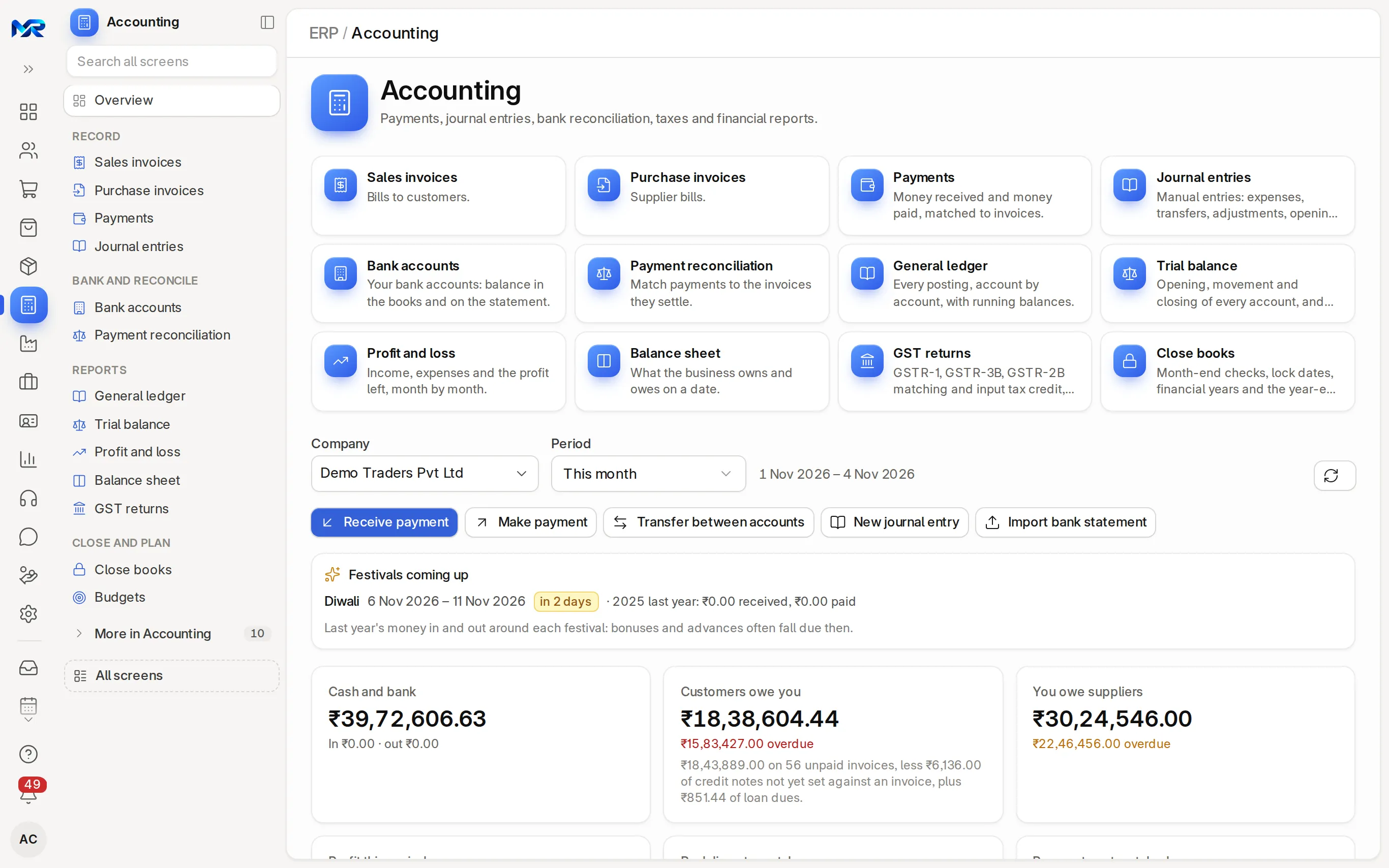
“Who owes you”, under Sales, ages each customer’s unpaid invoices by days past the due date (or the invoice date) into not due, 0–30, 31–60, 61–90, 91–120 and 120+ columns. Its total is the customers’ balance in the ledger, with a line explaining any gap to the unpaid invoices. From an overdue invoice you can send a payment reminder that shows who it goes to, the channel and the exact text before it is sent.