
What it means
A migration has three layers. Masters: customers, suppliers, items, chart of accounts. Opening balances: ledger balances, stock, unpaid invoices on the cut-over date. History: past vouchers, if you need them in the new system rather than in the old one’s archive. Each layer is imported, then checked: the trial balance, stock and party balances must match the old system on the same date.
Example
Kaveri Agencies moves on 1 Apr 2027:
| Layer | Count | Check |
|---|---|---|
| Customers and suppliers | 640 | Same GSTINs and balances |
| Items | 1,850 | Same HSN codes and stock by godown |
| Opening trial balance | 210 ledgers | Totals equal the old system |
| Unpaid invoices | 312 | Ageing equals the old ageing |
Common mistakes
- Migrating duplicate and dead records instead of cleaning first.
- Skipping a parallel run, so a mismatch shows up only at GST return time.
- Bringing years of history nobody will open, and paying for it.
In MyRecords
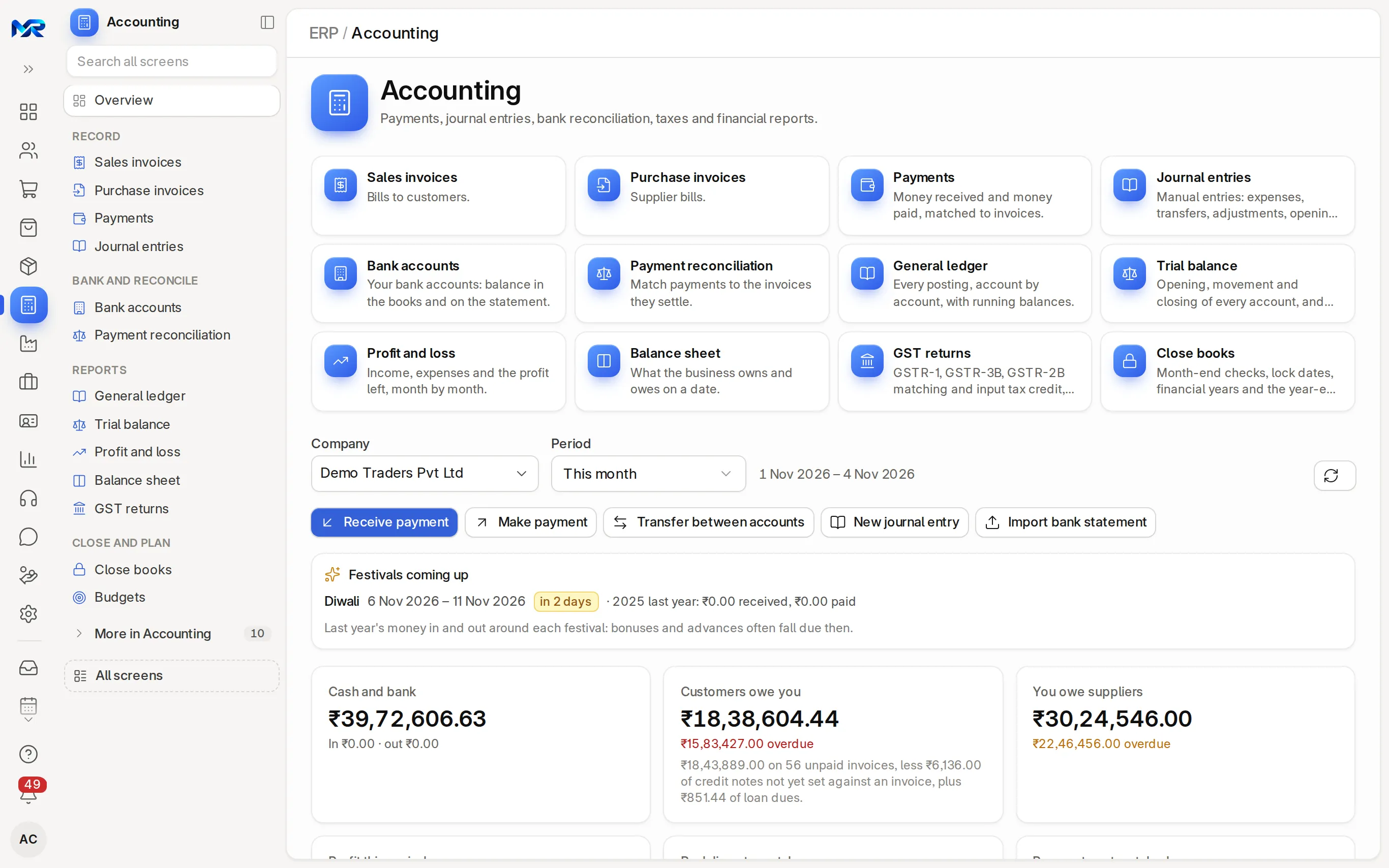
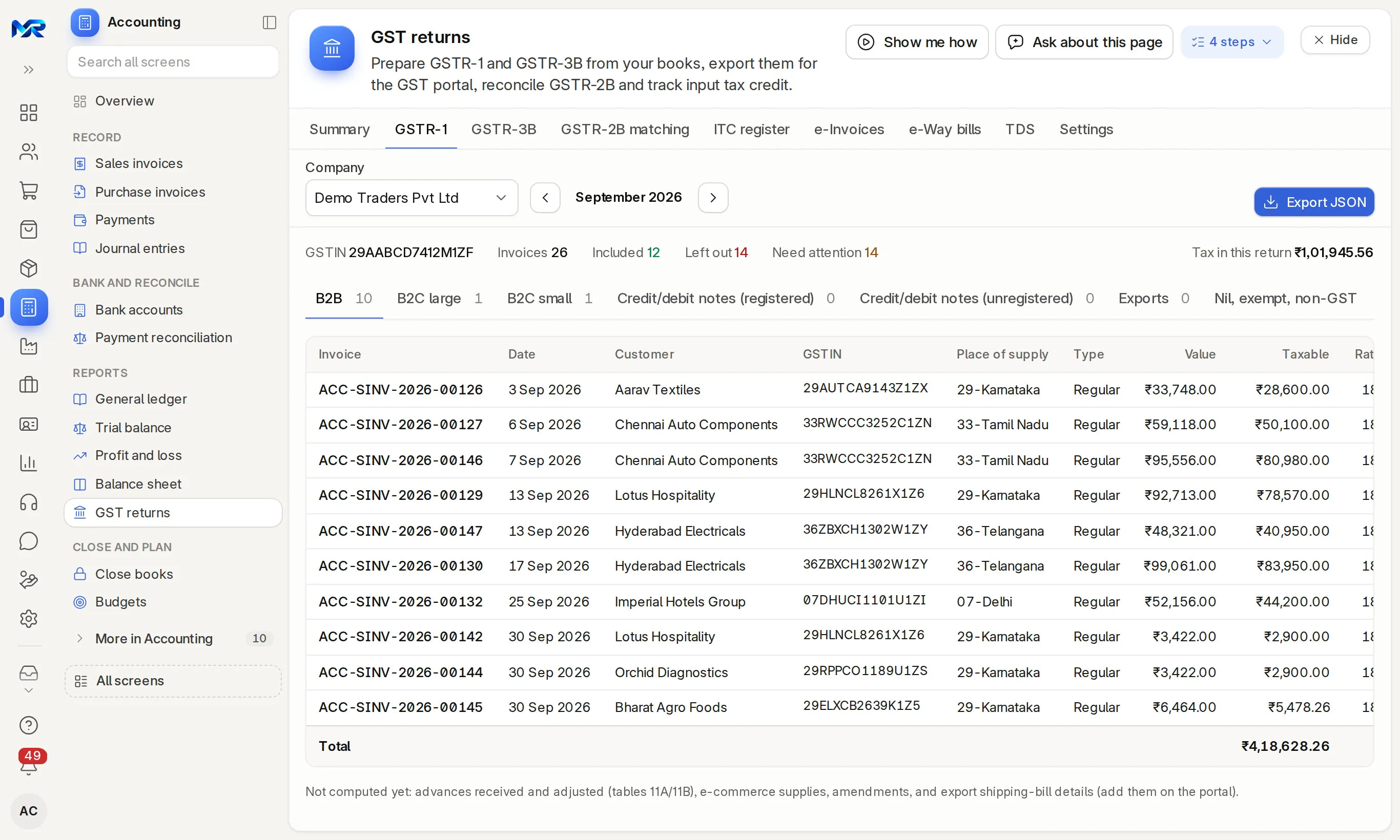
MyRecords imports from Tally: customers and suppliers from party ledgers, stock items with opening stock, BOMs, and Day Book vouchers as journal entries, each checked before anything is saved. That import has been tested on Tally’s own sample export, not yet on a client’s data. Customers, suppliers and items exported from Vyapar, Zoho Books or Busy are read as they are. Other data comes in through spreadsheet import, where every row is checked like a record typed by hand; an import that created new records can be undone. Masters and opening balances are part of setup; history is quoted separately. See data migration.