
What it means
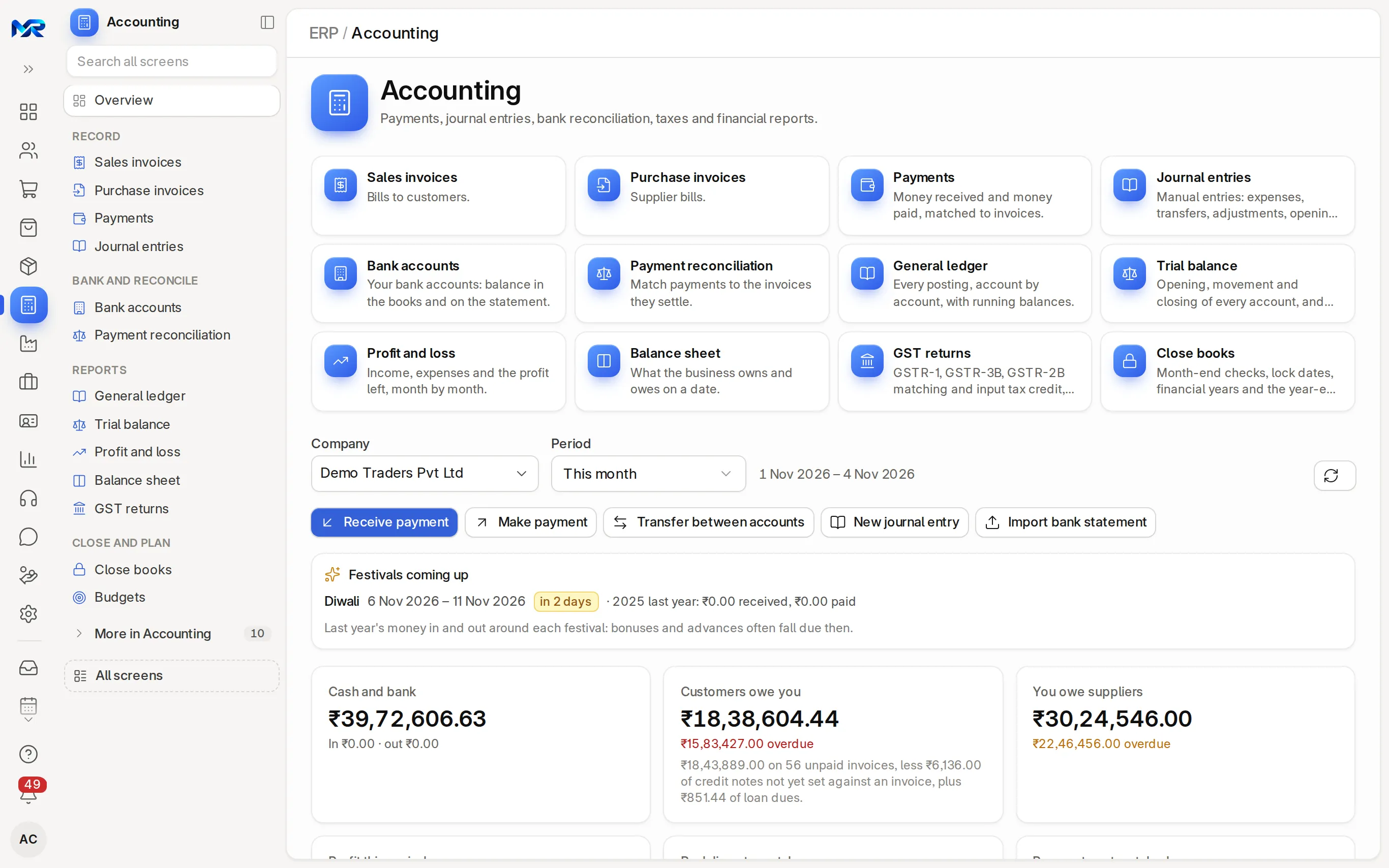
Most small businesses start with separate tools: accounting software, a billing app, stock in Excel, payroll with a consultant, leads in WhatsApp. Each holds its own copy of customers, items and amounts, and someone retypes between them. An ERP keeps one copy. A sales order reserves stock, the delivery moves it, the invoice posts to the ledger and the GST return, and the payment clears the customer’s balance, without re-entry.
Example
Kaveri Agencies, Mysuru, before and after:
| Task | Separate tools | One ERP |
|---|---|---|
| Invoice a delivery | Retype items into billing | Make the invoice from the delivery |
| Stock after a sale | Update Excel at day end | Stock moves when the delivery is submitted |
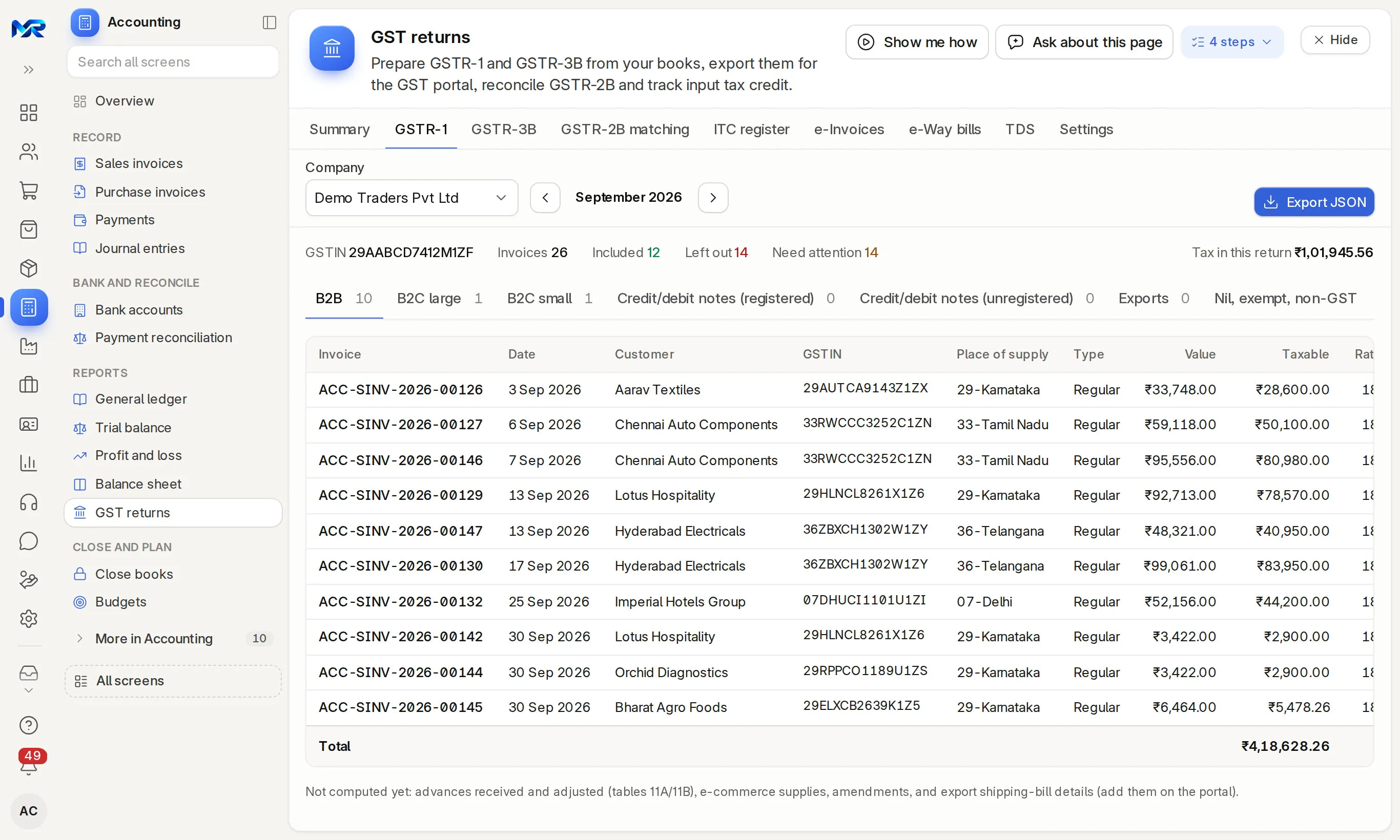
| GSTR-1 | Export, clean, re-key | Prepared from the invoices already in the books |
| Salesperson’s view | Calls the office | Sees stock and the customer’s balance, if allowed |
Common mistakes
- Buying every module on day one and rolling them all out at once.
- Moving years of messy data instead of clean masters and opening balances.
- Choosing by feature list alone, not by who will support you after go-live.
In MyRecords
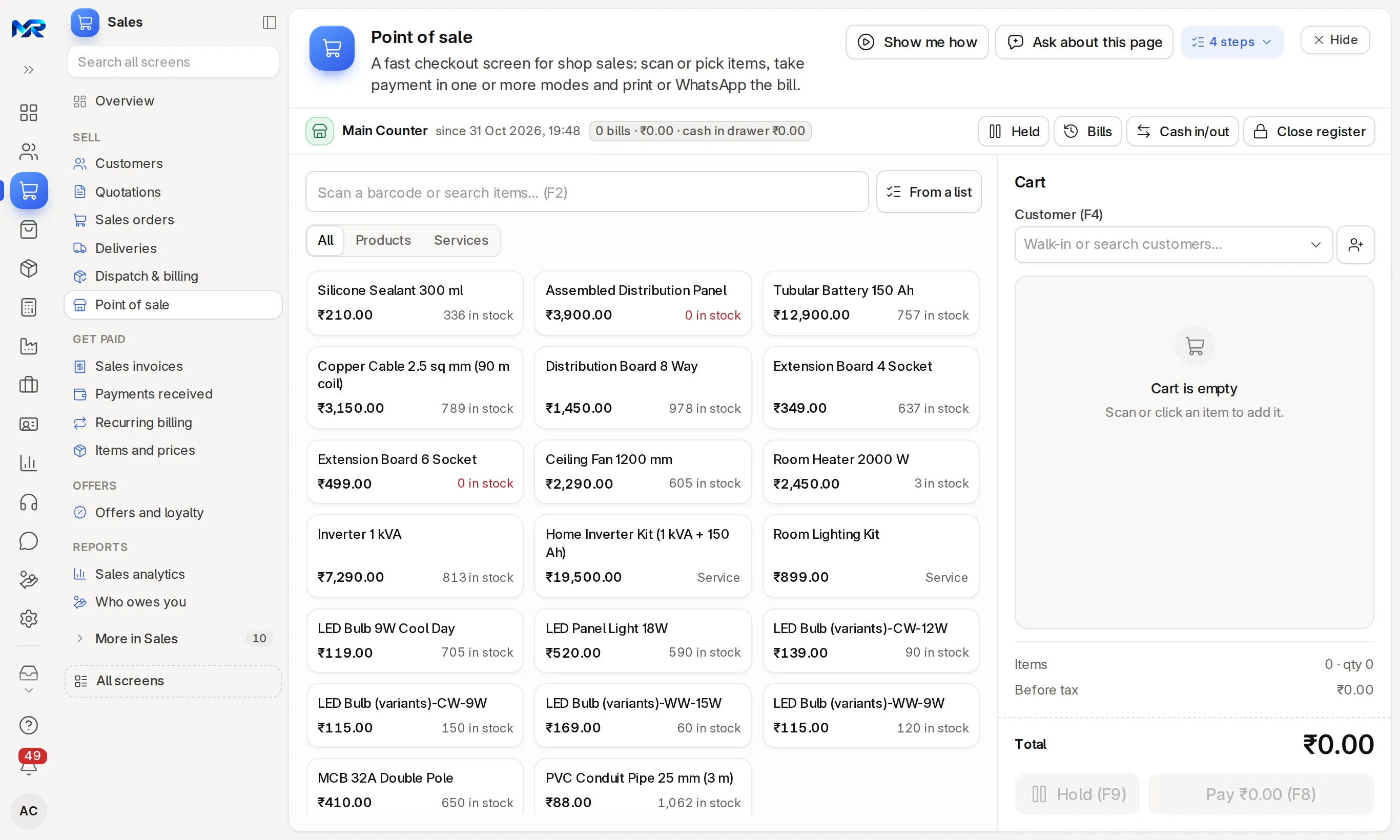
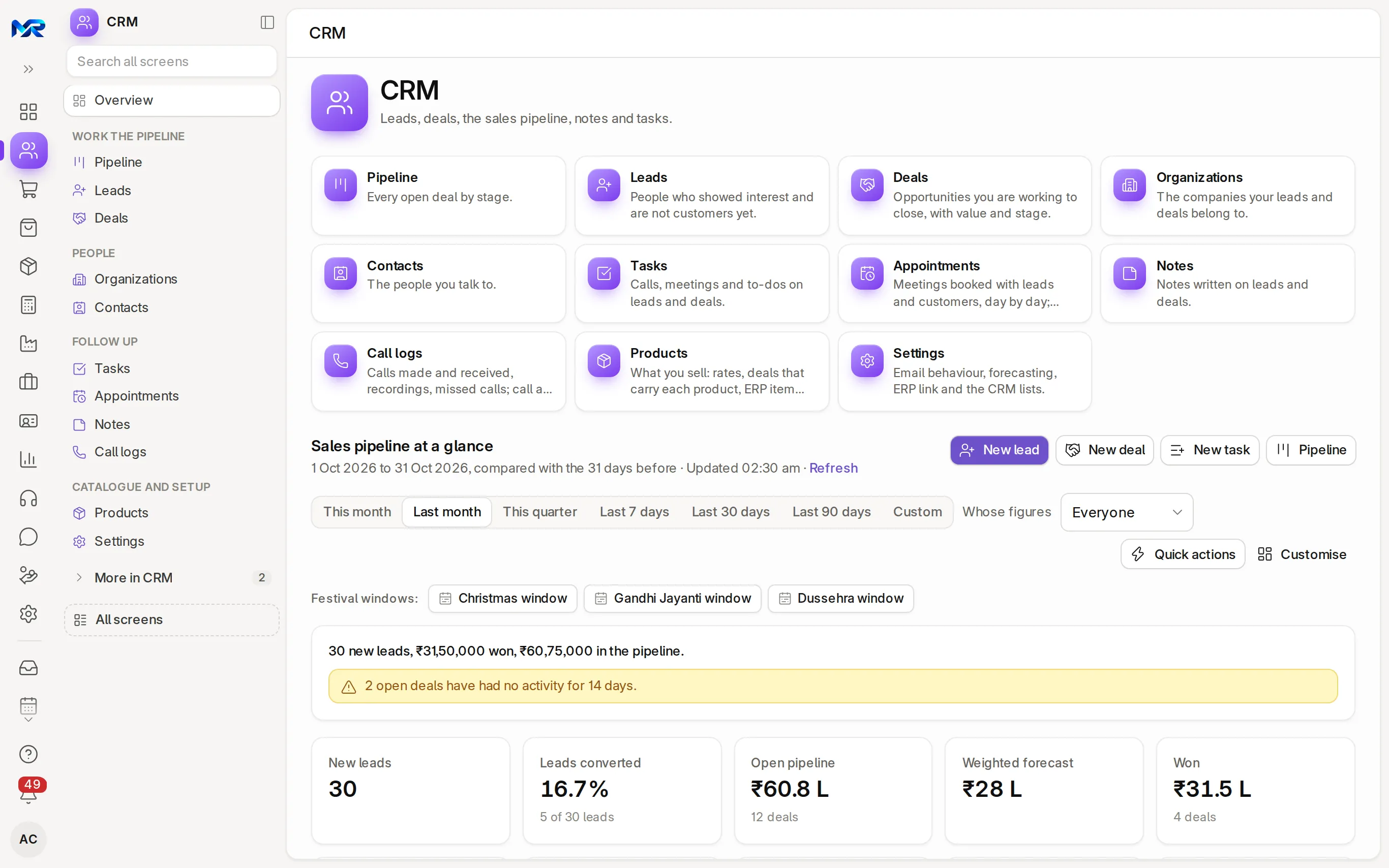
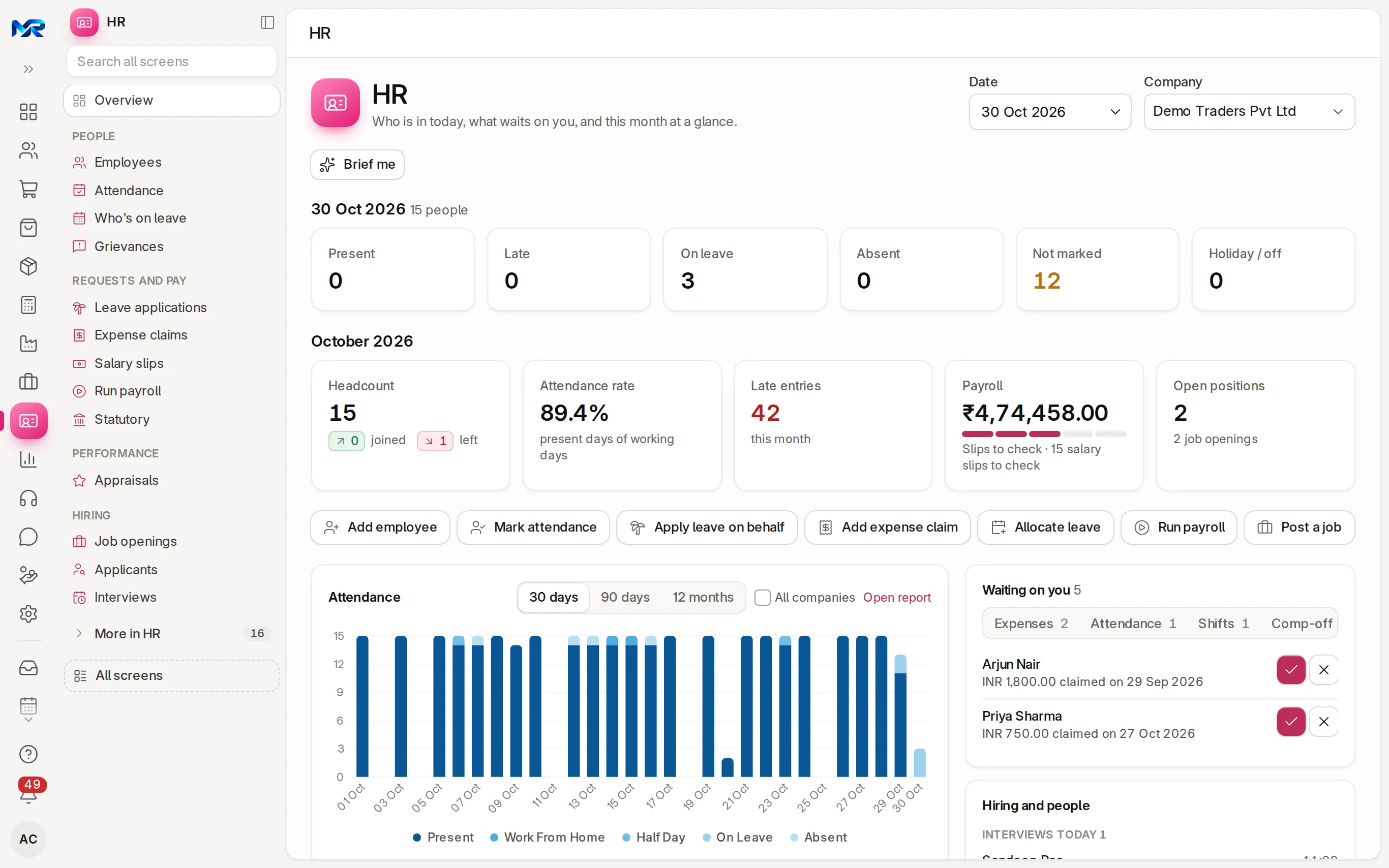
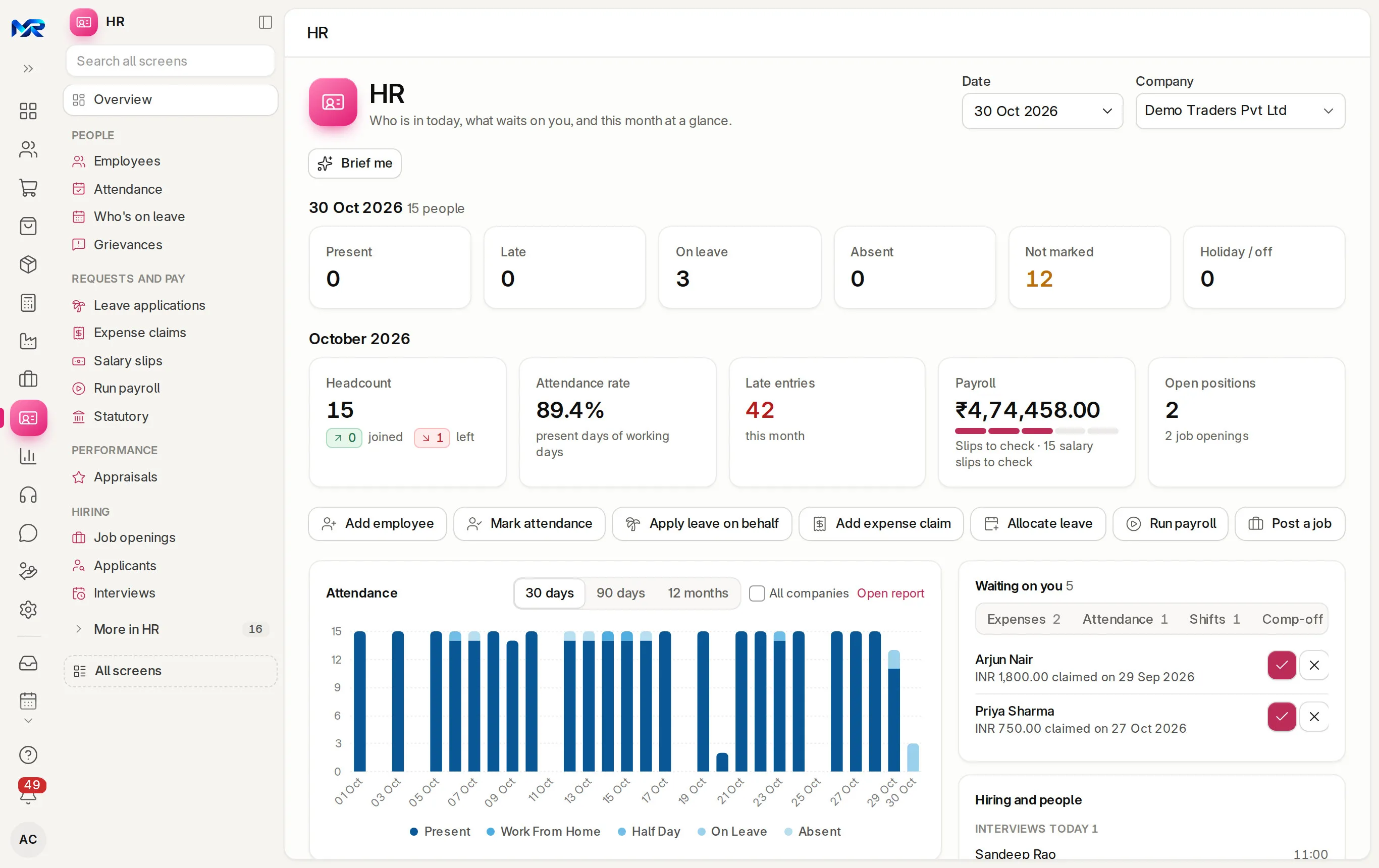
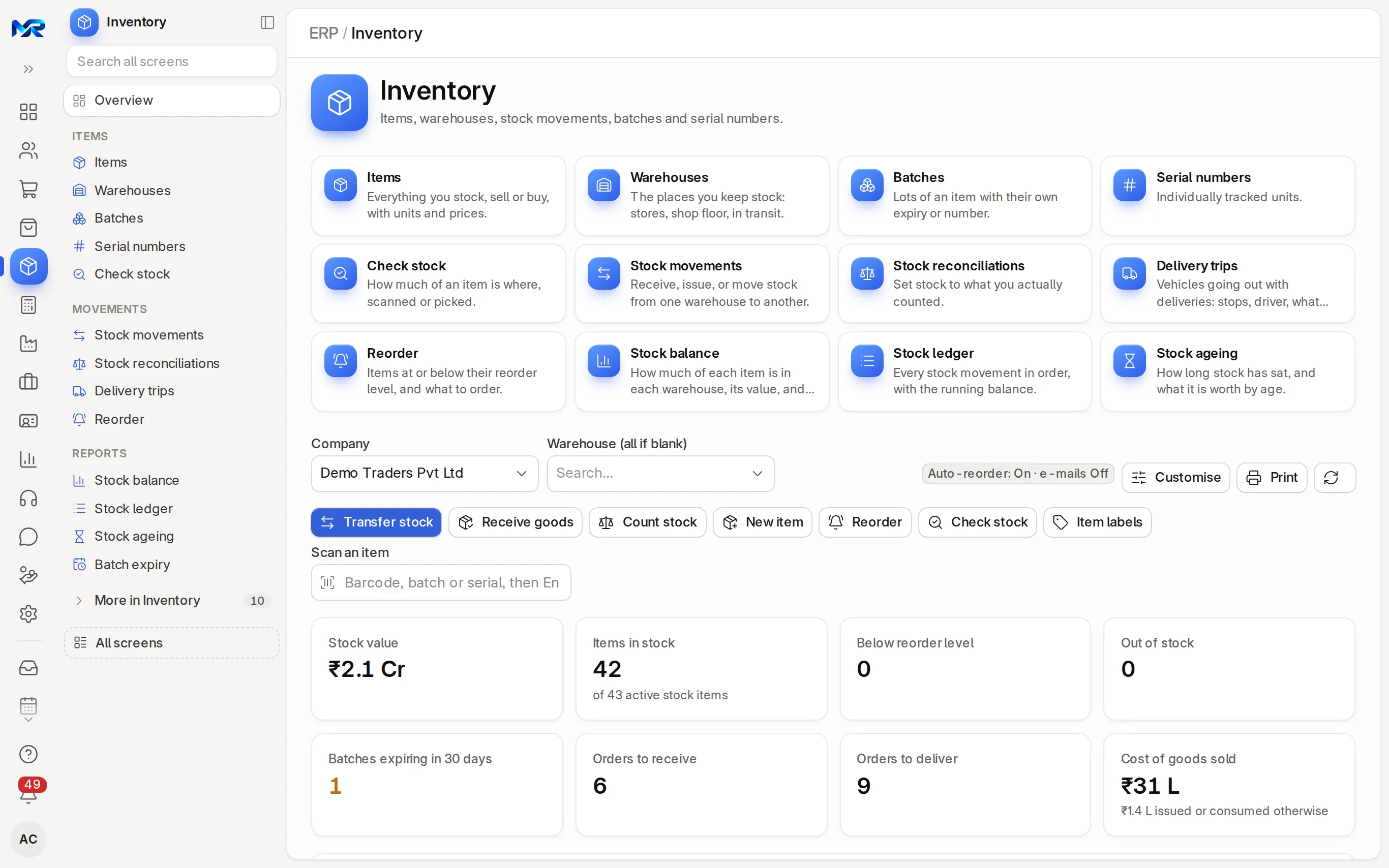
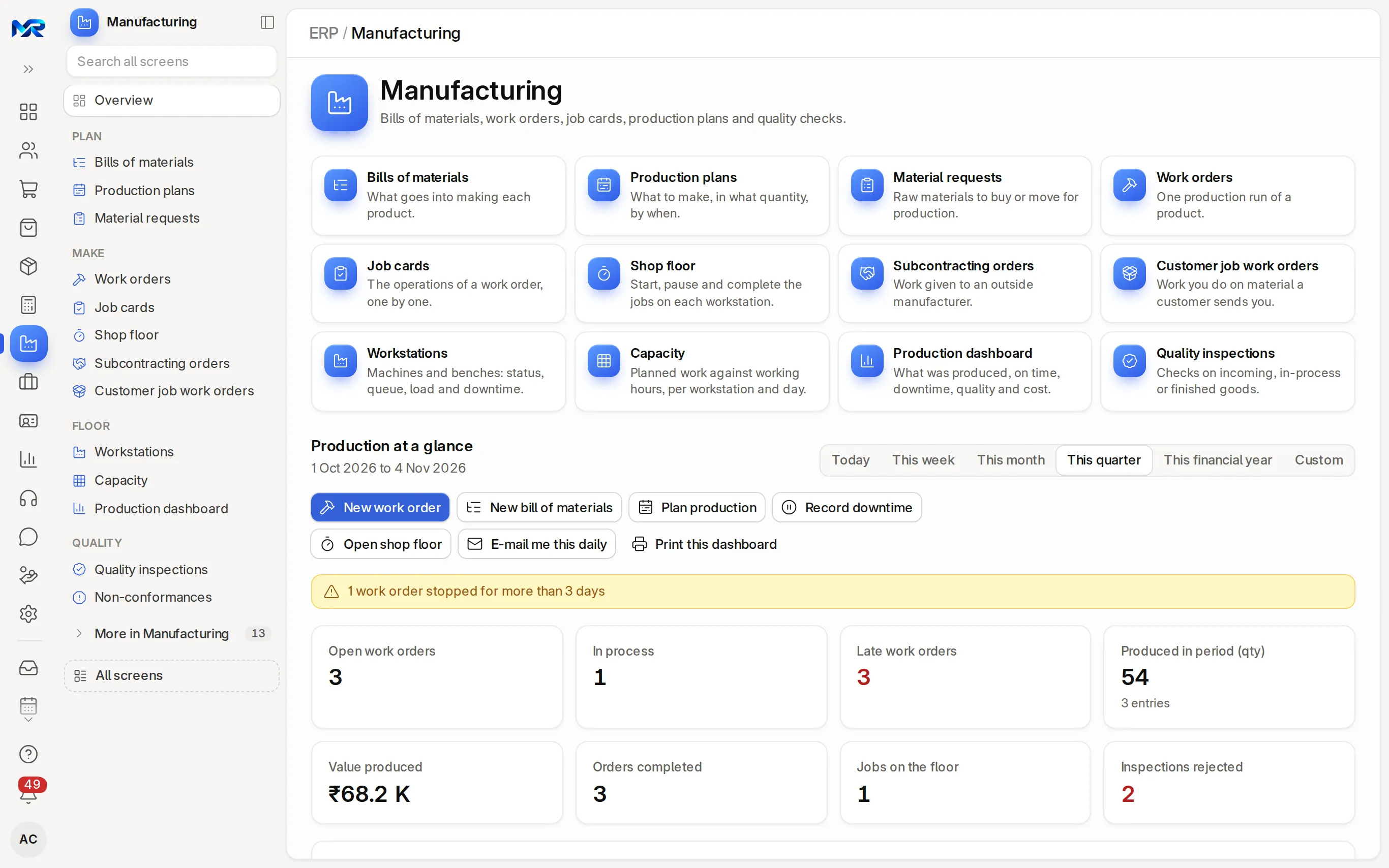
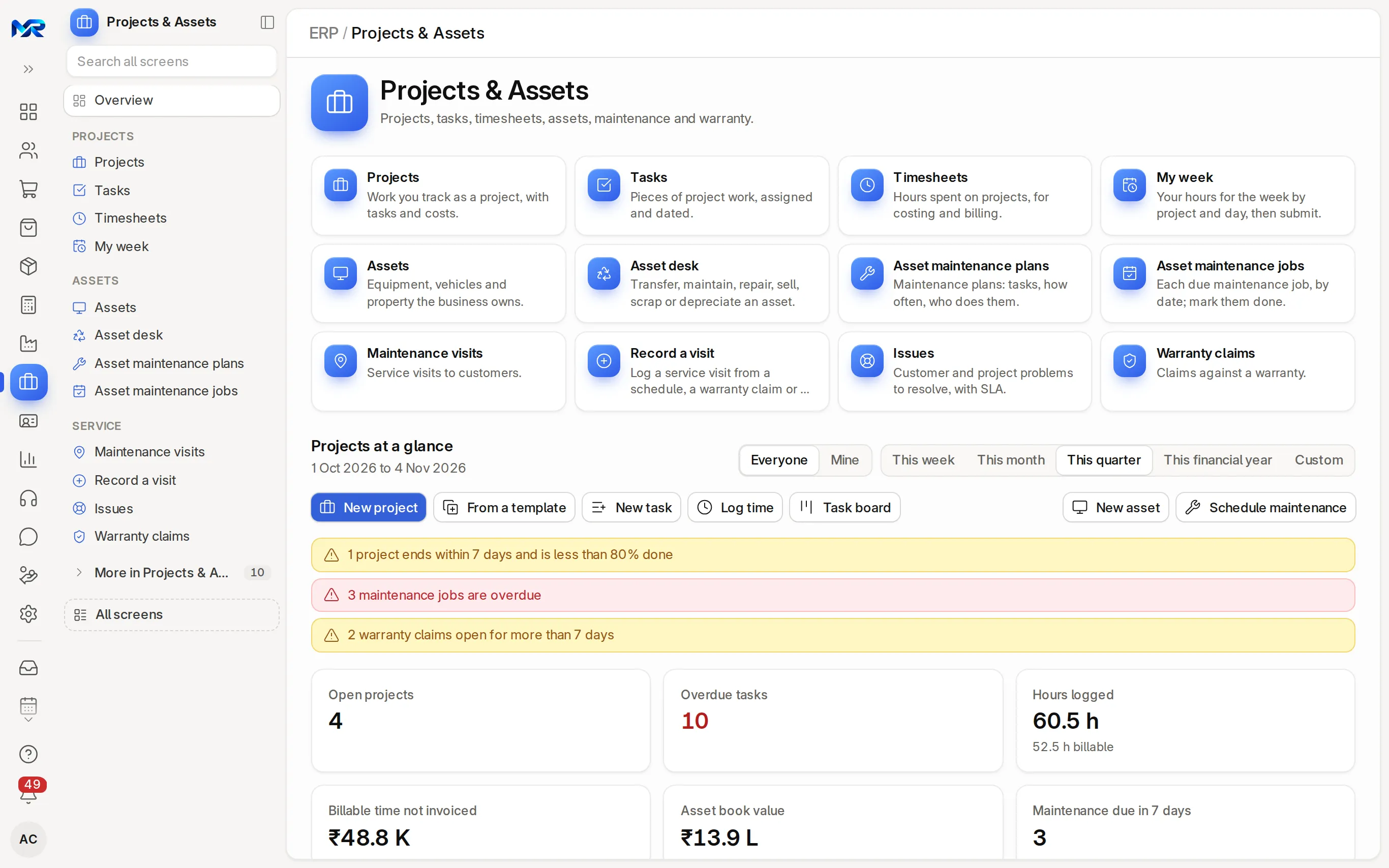
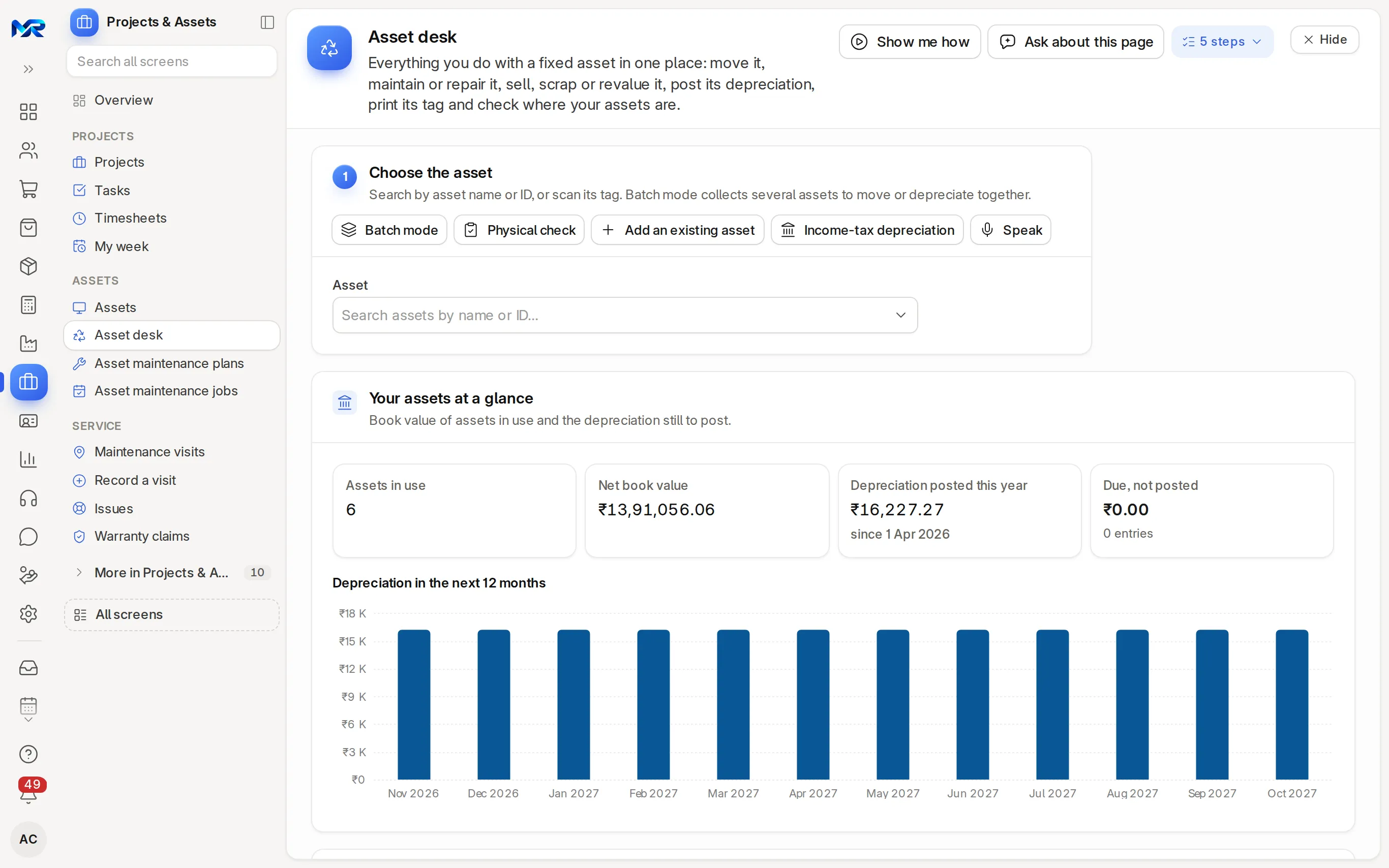
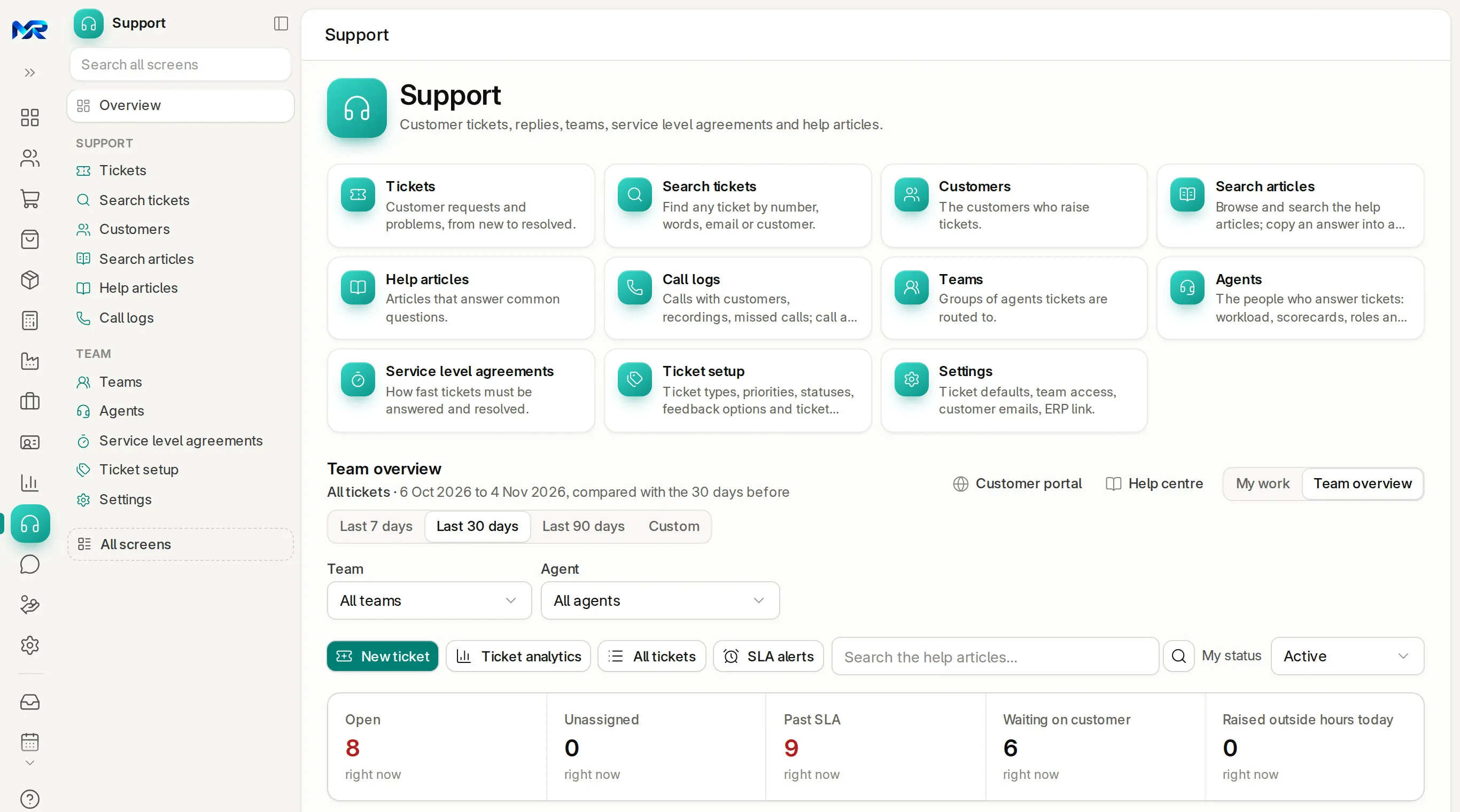
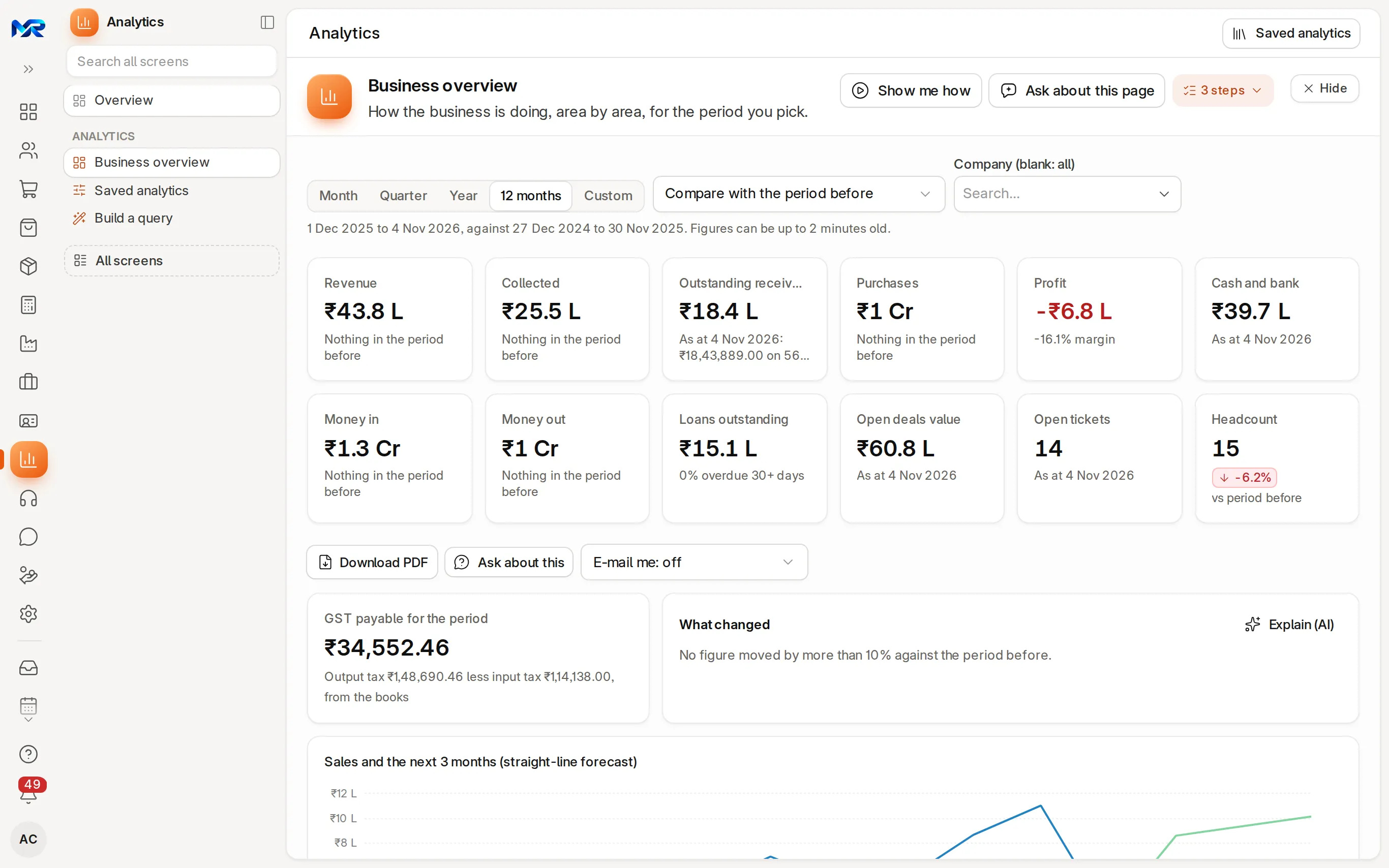
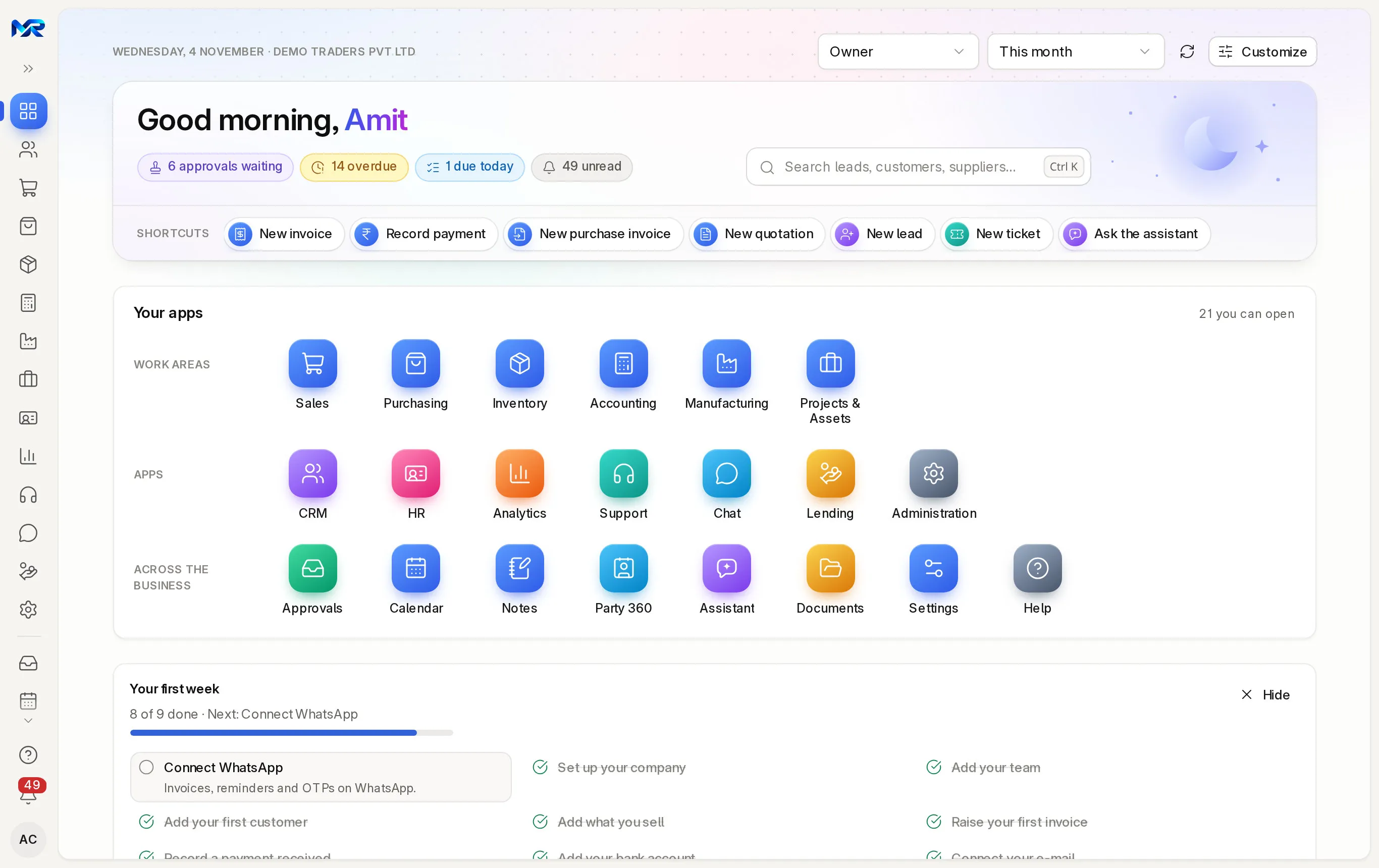
MyRecords is a business management system for small and medium businesses in any country — accounting and tax, sales and purchasing, inventory and point of sale, HR and payroll, CRM, support, team chat and analytics in one place. Our team builds it, customises it to the way you work and hosts it on your servers or ours, with unlimited users and only the modules you choose. See the modules or get a quote.