
What it means
Every GST registration gets one GSTIN. A business registered in three states has three GSTINs on the same PAN. The 15 characters read like this:
| Characters | Meaning |
|---|---|
| 1–2 | State code (29 = Karnataka, 33 = Tamil Nadu, 27 = Maharashtra) |
| 3–12 | The business’s PAN |
| 13 | Entity number for that PAN in that state (1, 2 … then letters) |
| 14 | Z by default |
| 15 | Check character worked out from the first 14 |
Example
Take a made-up GSTIN for Kaveri Agencies, Mysuru: 29ABCDE1234F1Z5. “29” says Karnataka. “ABCDE1234F” is the PAN. “1” is its first registration in Karnataka. The last character lets software catch a typing slip before the number goes on an invoice.
Because the first two digits name the state, the GSTIN of a buyer is the quickest way to decide place of supply for a business sale.
Common mistakes
- Printing the PAN where the GSTIN should be. The buyer cannot claim input tax credit on that invoice.
- Copying a GSTIN without checking it is active. A cancelled GSTIN on a B2B invoice moves the sale into the wrong GSTR-1 table.
- Using one GSTIN for a branch in another state. Each state needs its own registration.
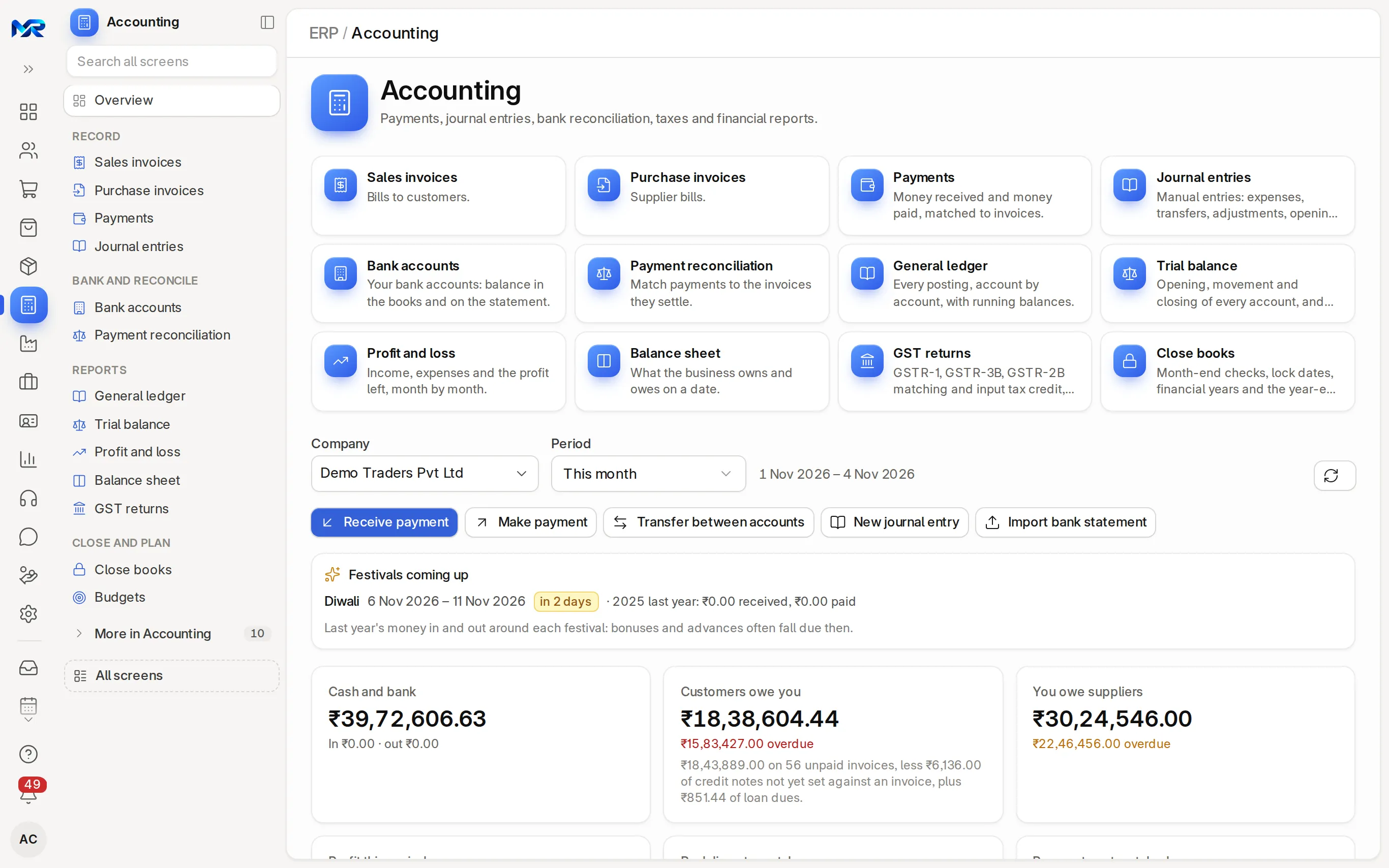
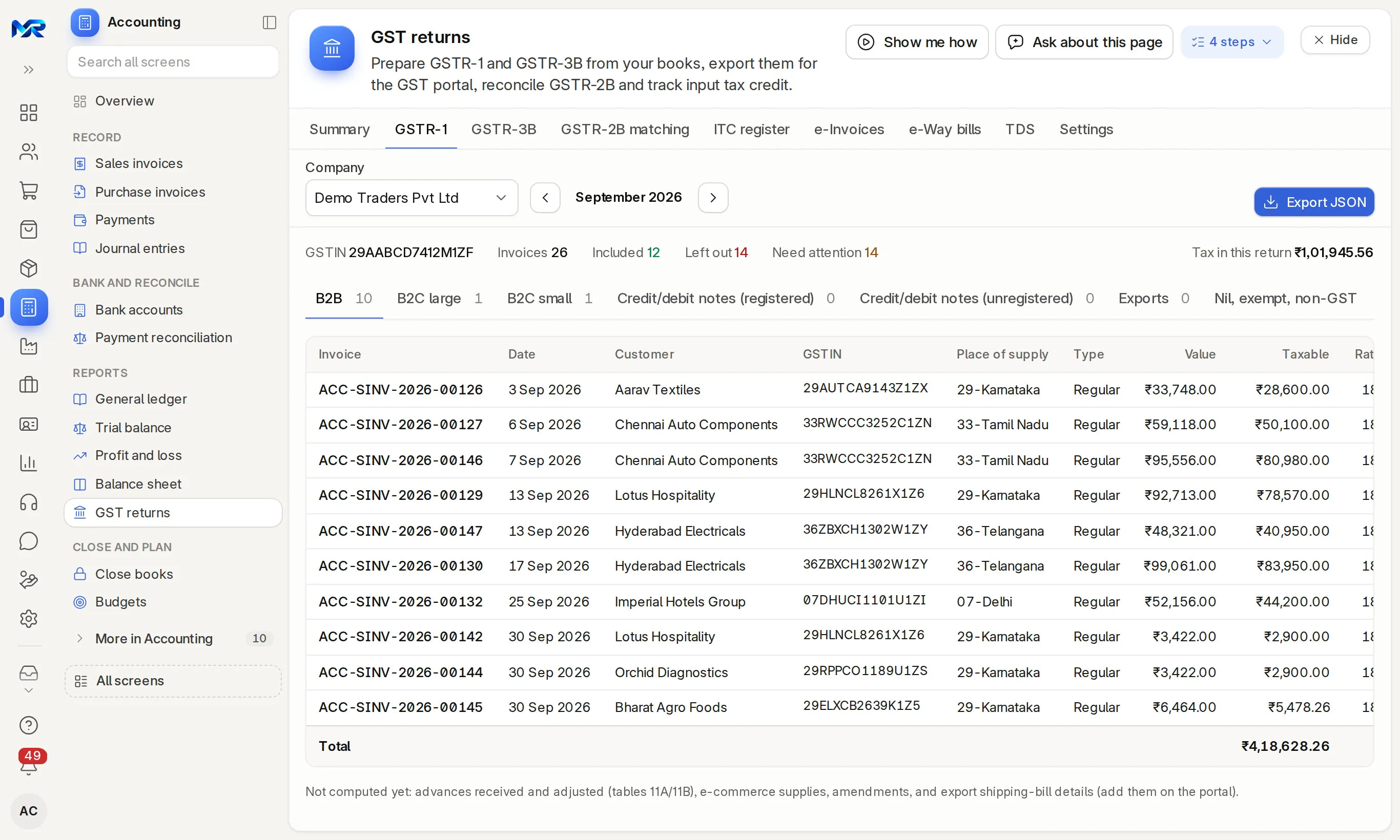
In MyRecords
MyRecords stores a GSTIN on the company, on each customer and supplier, and on each address, and checks the format, state code and check character when you save. Once your e-invoice API login is connected, it can also look a GSTIN up on the GST portal. The GST tax invoice prints your GSTIN and the customer’s, never the PAN. Returns are worked out per company with one GSTIN, so a business with registrations in several states sets up one company per GSTIN.