
What it means
HSN is a product code system used by customs worldwide. India uses it to fix GST rates for goods: the first two digits are the chapter, four digits the heading, six the sub-heading and eight the tariff item. Notification 78/2020-Central Tax sets how many digits your tax invoice must show:
| Your AATO last year | Digits on invoices |
|---|---|
| Up to ₹5 crore | 4 digits on B2B invoices (optional on B2C) |
| Above ₹5 crore | 6 digits on all invoices |
Example
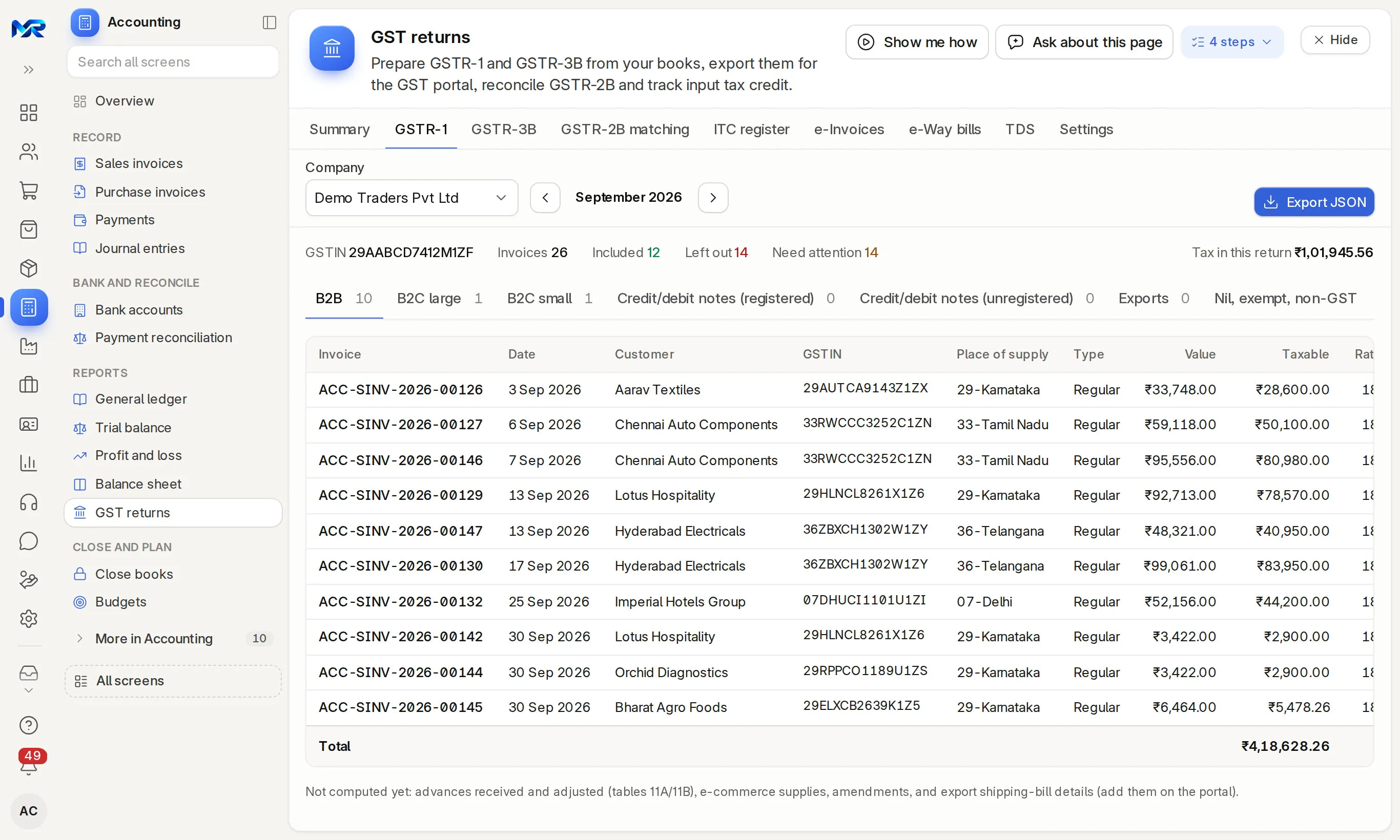
Shree Lakshmi Hardware, Bengaluru (AATO ₹3 crore) sells brass taps. Taps and valves fall under heading 8481, so its invoices show 8481. Kaveri Agencies, with AATO above ₹5 crore, must show the six-digit sub-heading for the same taps. In GSTR-1, both report an HSN-wise summary of quantity, value and tax.
Common mistakes
- Picking an HSN code by product name in a search box, not by the tariff description, and charging the wrong rate.
- Using a 4-digit code on invoices when last year’s AATO was above ₹5 crore; Notification 78/2020 asks for 6 digits.
- Leaving the HSN on the item master blank, so the HSN summary in GSTR-1 has gaps.
In MyRecords
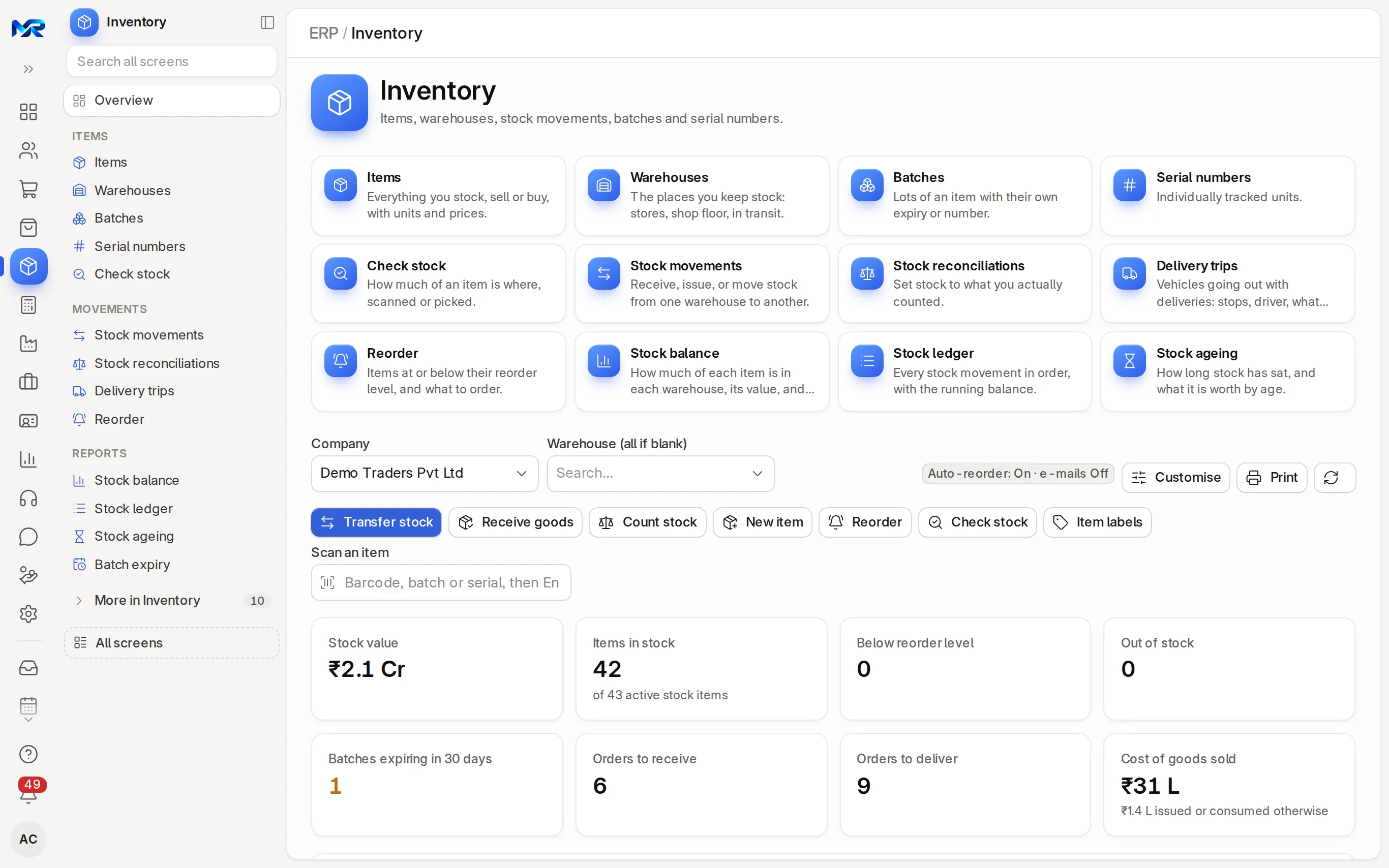
Each item carries its HSN code and GST rate, and the default GST tax invoice prints the HSN on every line. The official HSN/SAC list ships with the product, you set the digits your invoices need (4, 6 or 8), e-invoice checks warn when a code is shorter than 6 digits, and the GSTR-1 file includes the HSN summary. With the AI Assistant on, Suggest HSN (AI) offers codes from the official list. Our free HSN/SAC finder helps you look codes up.