
What it means
Each state has its own GST Act. On an intra-state sale the state’s tax, SGST, is charged at the same rate as CGST. In union territories without a legislature, such as Chandigarh, Ladakh, Lakshadweep, Andaman and Nicobar Islands, and Dadra and Nagar Haveli and Daman and Diu, the same tax is called UTGST. Delhi, Puducherry and Jammu and Kashmir have legislatures, so they use SGST.
Example
A Pune shop sells goods worth ₹10,000 at 5% to a buyer in Pune.
| Line | Amount |
|---|---|
| Taxable value | ₹10,000 |
| CGST 2.5% | ₹250 |
| SGST 2.5% | ₹250 |
| Invoice total | ₹10,500 |
The same sale in Chandigarh would show CGST ₹250 + UTGST ₹250.
Common mistakes
- Using SGST credit of one state to pay tax under another state’s GSTIN. Credit stays with the registration that earned it.
- Setting off SGST credit against CGST. SGST credit goes against SGST, then IGST, never CGST.
- Printing “SGST” for a Chandigarh sale when the head is UTGST.
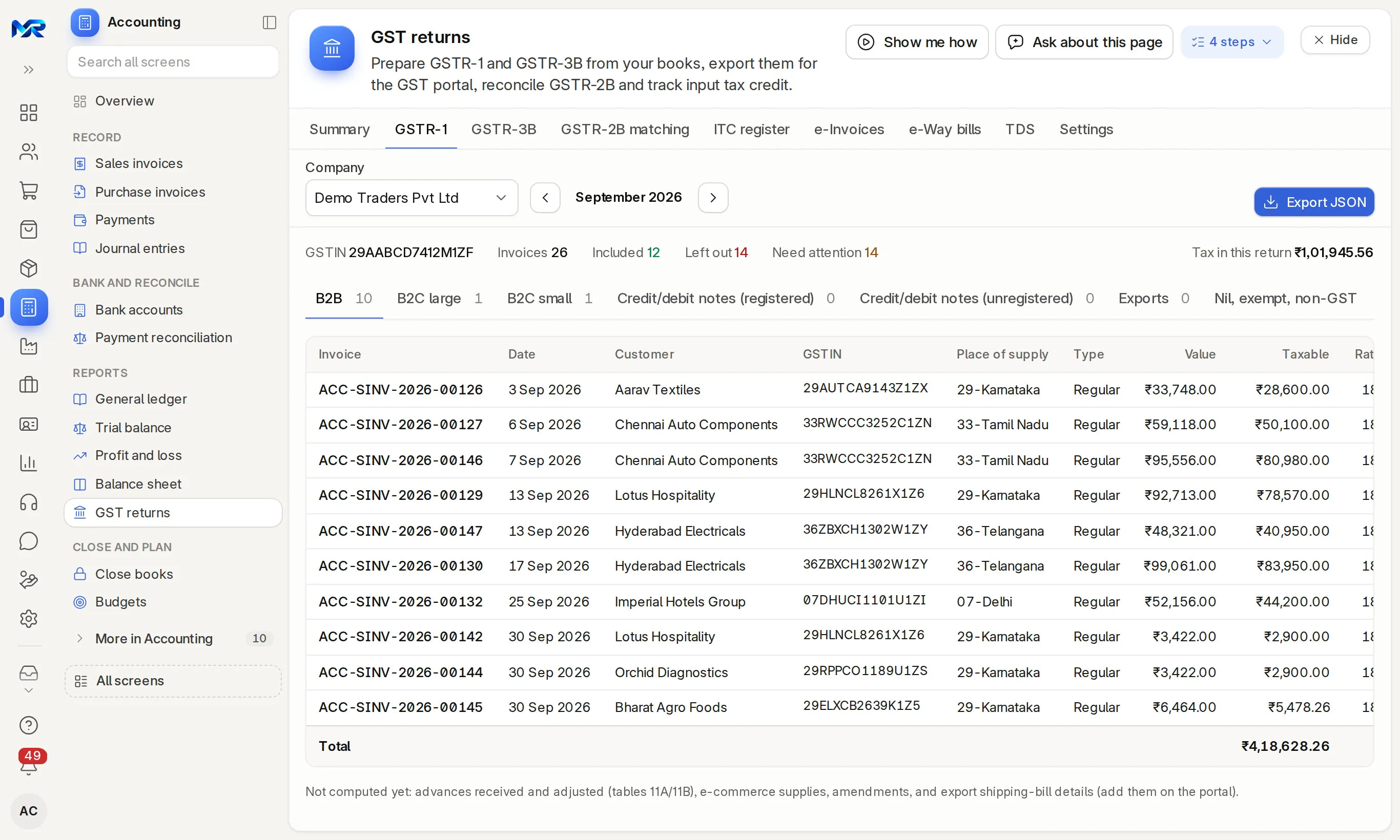
In MyRecords
MyRecords charges CGST + SGST when the place of supply is the same state as your company and IGST otherwise, and posts SGST to its own ledger. Returns are worked out per company with one GSTIN, so each state’s SGST stays with that state’s registration.