
What it means
Medicines, food, paints, chemicals and cosmetics are sold by batch. Each batch has a number, a manufacturing date and an expiry date, and the label must carry them under the relevant product laws. Tracking stock by batch lets you sell the oldest stock first, find every customer who got a faulty lot, and write off what has expired.
Example
Kaveri Agencies stocks hand sanitiser:
| Batch | Expiry | Qty in Mysuru godown |
|---|---|---|
| KA-2607-11 | 31 Jul 2027 | 180 bottles |
| KA-2610-04 | 31 Oct 2027 | 500 bottles |
An order for 200 bottles on 5 Nov 2026 is picked as 180 from KA-2607-11 and 20 from KA-2610-04 (first expiry, first out). If the maker recalls KA-2607-11, Kaveri can list the three customers who received it.
Common mistakes
- Receiving stock without the batch, then guessing at dispatch.
- Picking by shelf position, not expiry, so old batches expire unsold.
- Mixing batches in one bin with no label.
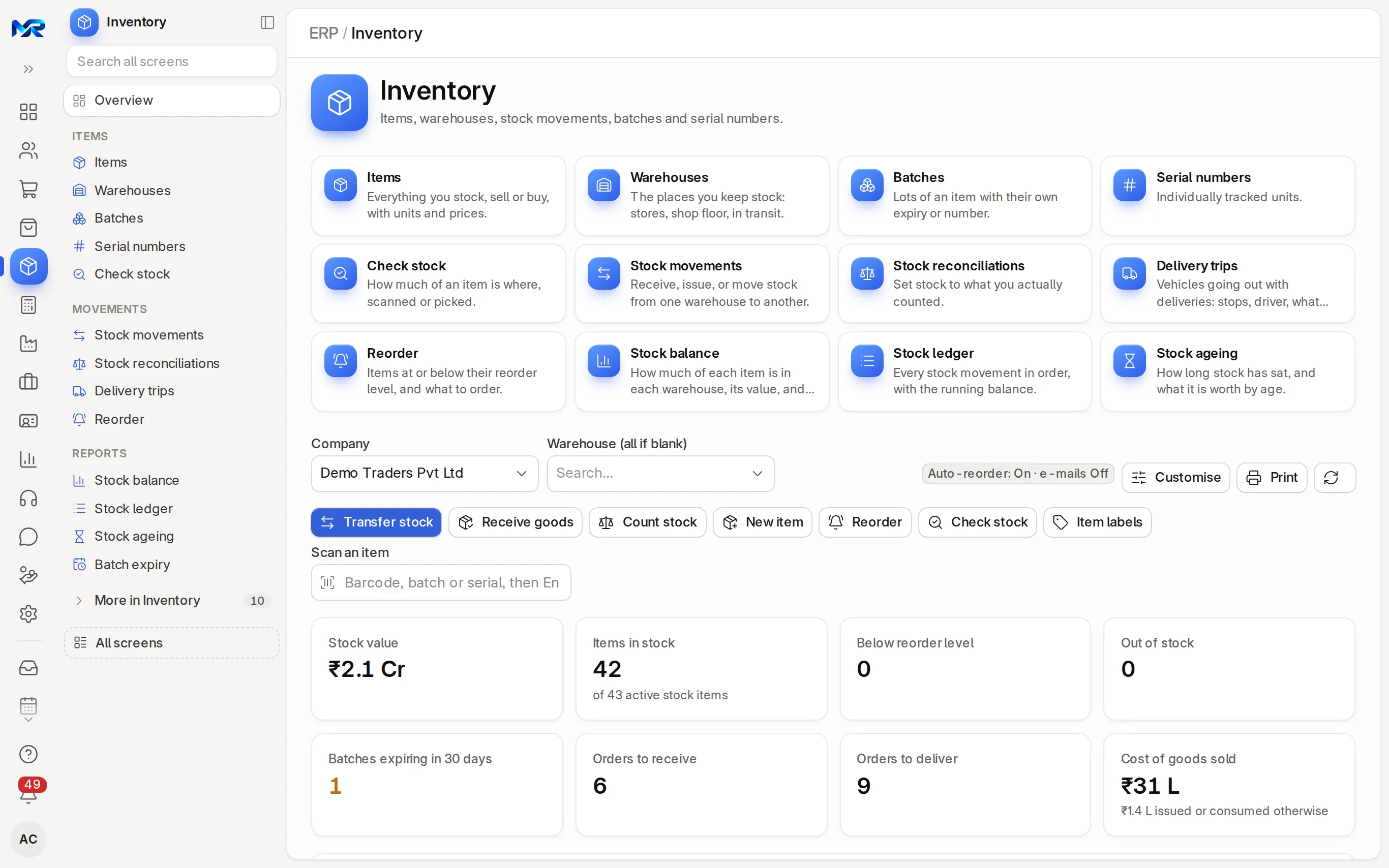
In MyRecords
Items can be set to track batches, serial numbers or both. Each batch has its own expiry and its stock in each warehouse, and deliveries and invoices carry the batch; a delivery’s Picking tab lists the batches that expire first at the top. The Batch expiry page shows what expires soon and what will not sell in time, and moves expired batches to scrap in one transfer.