
What changed on 1 Apr 2026
- The Income-tax Act, 2025 replaced the 1961 Act from 1 Apr 2026. For salary in tax year 2026-27, TDS is deducted under section 392(1) (TDS compliance FAQs).
- The new Act counts income by tax year: tax year 2026-27 runs from April 2026 to March 2027.
- The Income-tax Rules, 2026 renumbered the forms. The quarterly salary statement is Form 138 (earlier Form 24Q). The non-salary statement is Form 140 (earlier 26Q).
- TDS deducted in March 2026 was due by 30 Apr 2026.
Tax year 2026-27 slabs
The Finance Bill 2026 memo says “there is no change proposed in tax rates” for tax year 2026-27.
| Taxable income | Default rates (section 202) | Old-regime rates, if opted under section 202(4), below 60 years |
|---|---|---|
| Up to ₹2,50,000 | Nil | Nil |
| ₹2,50,001 to ₹4,00,000 | Nil | 5% |
| ₹4,00,001 to ₹5,00,000 | 5% | 5% |
| ₹5,00,001 to ₹8,00,000 | 5% | 20% |
| ₹8,00,001 to ₹10,00,000 | 10% | 20% |
| ₹10,00,001 to ₹12,00,000 | 10% | 30% |
| ₹12,00,001 to ₹16,00,000 | 15% | 30% |
| ₹16,00,001 to ₹20,00,000 | 20% | 30% |
| ₹20,00,001 to ₹24,00,000 | 25% | 30% |
| Above ₹24,00,000 | 30% | 30% |
Add 4% health and education cess on the tax, and surcharge above ₹50 lakh. Senior citizens have different old-regime limits.
Rebate and marginal relief. Under the default rates, a resident whose income is up to ₹12 lakh gets a rebate of up to ₹60,000, so pays no tax. Just above ₹12 lakh, marginal relief caps the tax at the income above ₹12 lakh. Under the old-regime rates the rebate is up to ₹12,500 for income up to ₹5 lakh. Both are in section 156 of the 2025 Act.
Worked example: monthly TDS
Shree Lakshmi Hardware pays its store manager ₹1,25,000 a month, ₹15,00,000 a year. She stays in the default regime, so the standard deduction is ₹75,000 under section 19 of the 2025 Act (₹50,000 in the old regime).
| Step | Amount |
|---|---|
| Salary for the year | ₹15,00,000 |
| Less standard deduction | ₹75,000 |
| Taxable income | ₹14,25,000 |
| Tax: 5% of ₹4,00,000 | ₹20,000 |
| Tax: 10% of ₹4,00,000 | ₹40,000 |
| Tax: 15% of ₹2,25,000 | ₹33,750 |
| Tax before cess | ₹93,750 |
| Cess at 4% | ₹3,750 |
| Tax for the year | ₹97,500 |
| TDS each month (÷ 12) | ₹8,125 |
Her colleague earns ₹12,50,000 a year. After the ₹75,000 deduction his taxable income is ₹11,75,000. The tax of ₹57,500 is within the section 156 rebate of up to ₹60,000 for income up to ₹12 lakh, so his TDS is nil.
If pay changes mid-year, recompute the year’s tax and spread what is left over the remaining months.
Quarterly statement: Form 138
| Quarter | Months | Due date |
|---|---|---|
| Q1 | April to June | 31 July |
| Q2 | July to September | 31 October |
| Q3 | October to December | 31 January |
| Q4 | January to March | 31 May of the next year |
Source: the department’s Form 138 user manual.
The year in five steps
- April: collect each employee’s regime choice and investment declarations.
- Every month: compute tax for the year, deduct one month’s share, and deposit it. MyRecords’ calendar uses the 7th of the next month; March deductions are due by 30 April.
- Every quarter: file Form 138 by its due date.
- January to March: collect proofs and adjust the last months’ TDS.
- After the year: issue the annual TDS certificate, Form 130 (earlier Form 16), to each employee.
How MyRecords helps
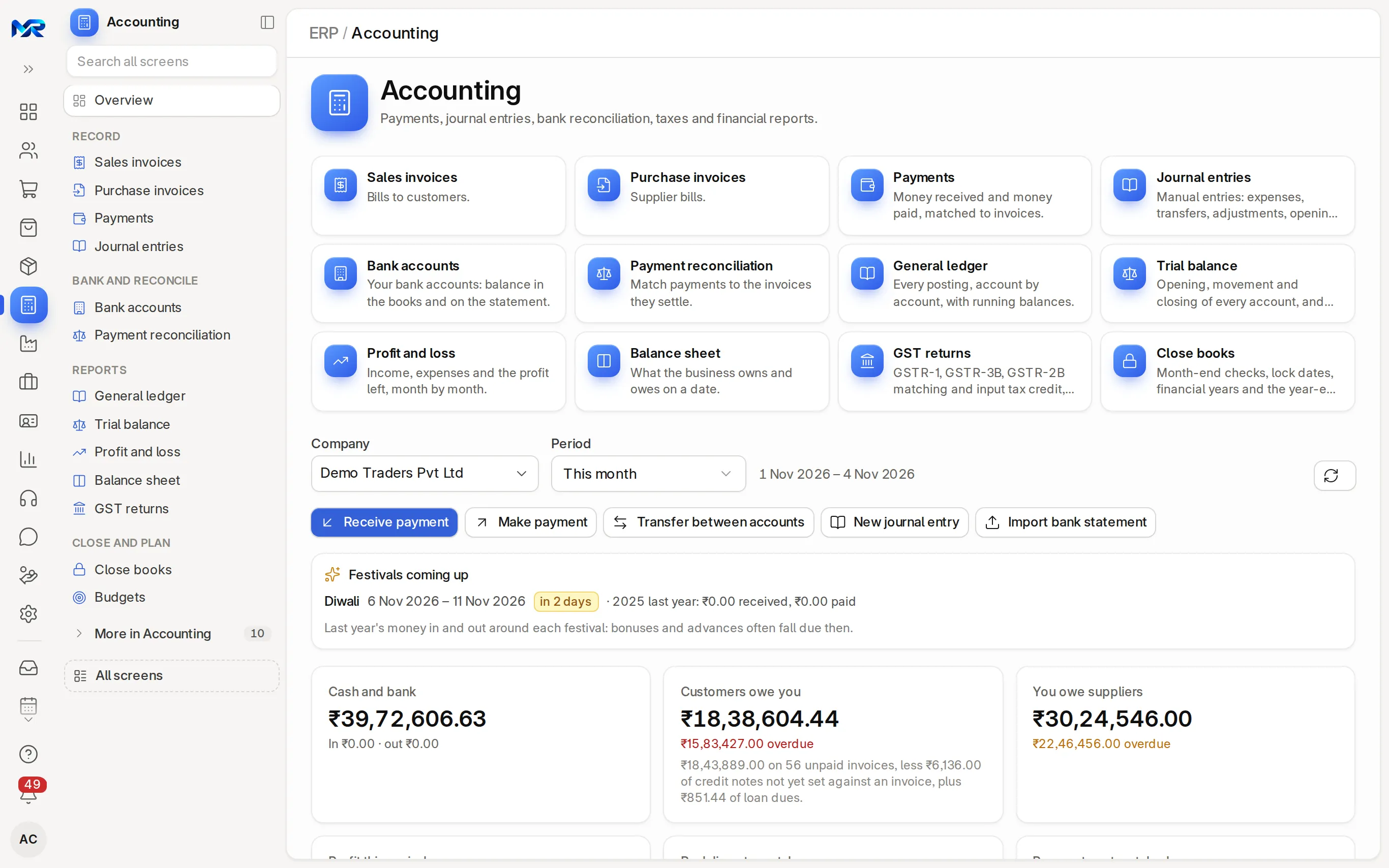
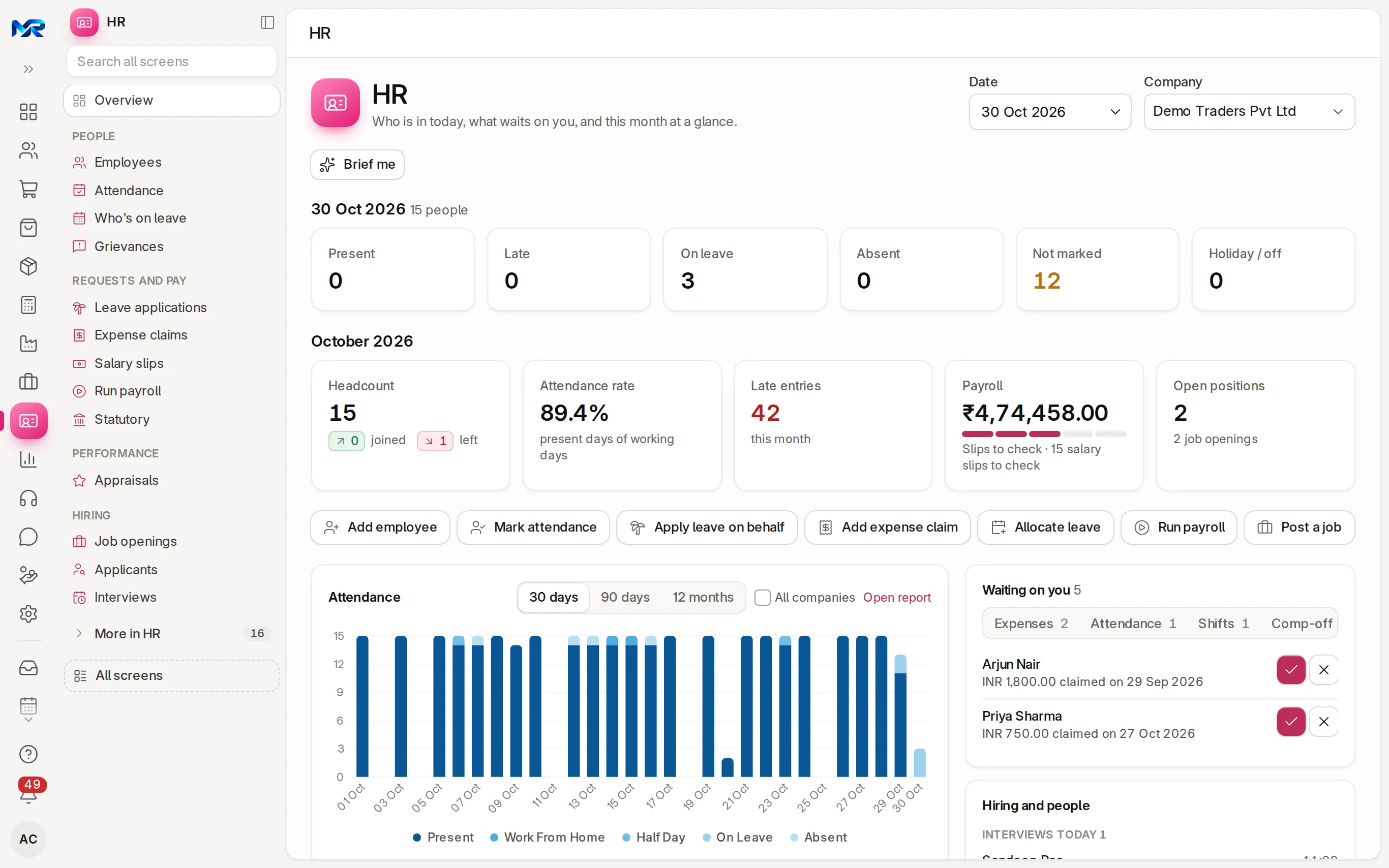
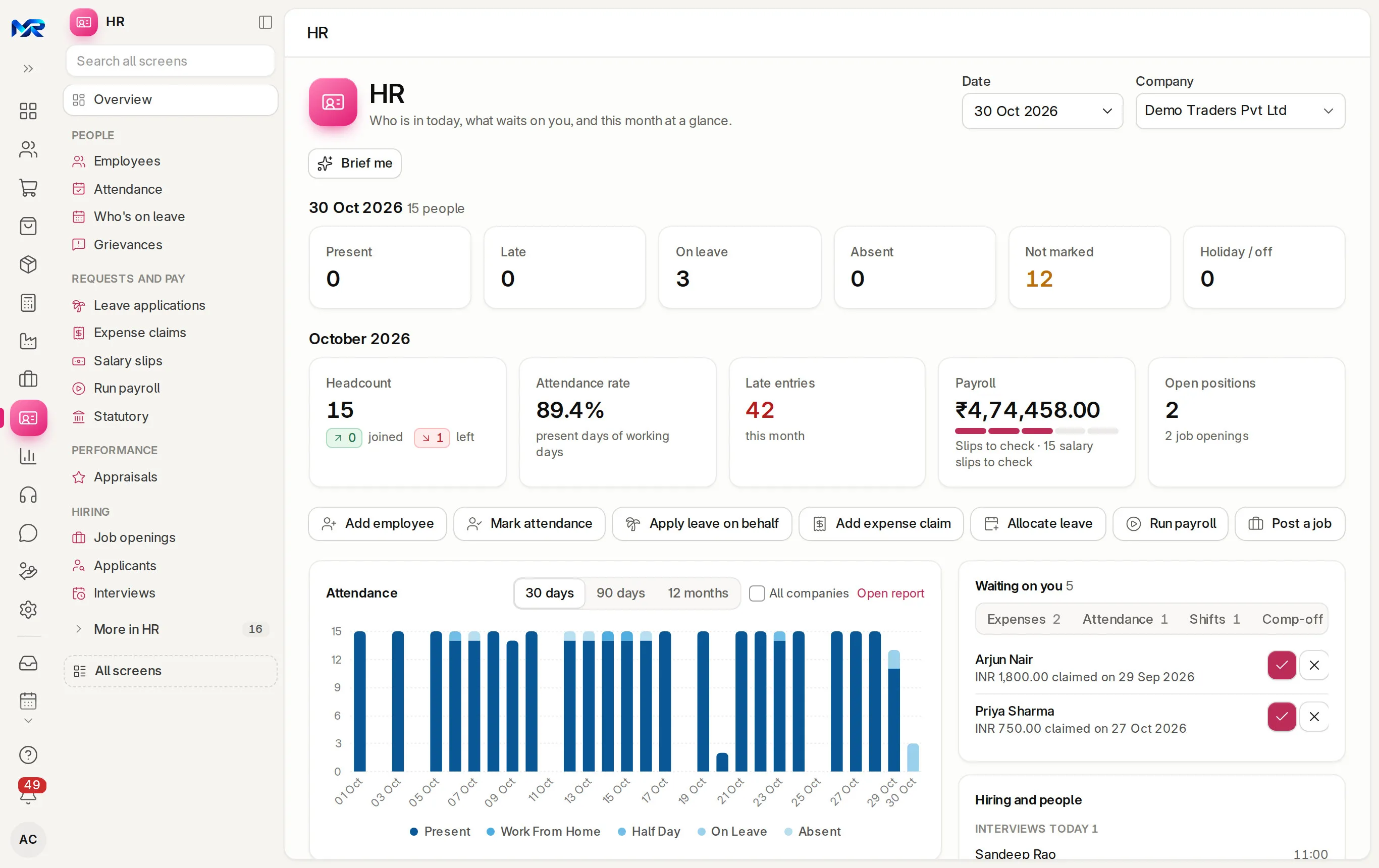
- Works out salary TDS each pay run from the salary structure and the employee’s declarations, with PAN and declaration status shown per employee.
- Employee self-service: staff see a tax projection from their latest payslip and send declarations and proofs to HR from their phone.
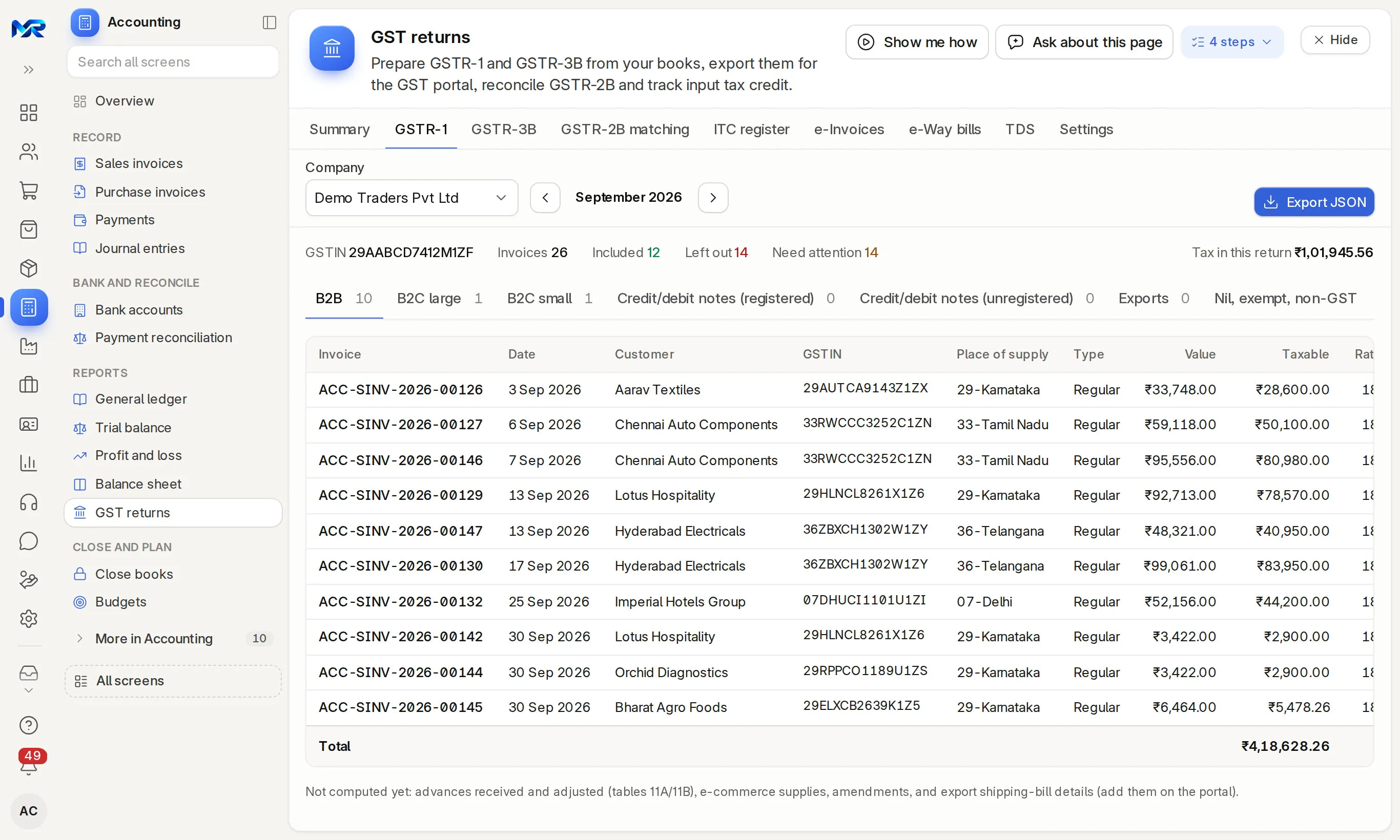
- Due dates on the statutory page and the Home calendar, and each deposit challan recorded for the quarterly statement.
- Form 24Q text file in Protean’s format, for quarters up to March 2026, and Annexure II for 2025-26 as Excel. Check the file with the free File Validation Utility before filing.
- Form 138 for 2026-27 is partial: Part B and Annexure I as an Excel layout to key into the utility. It does not make the Form 138 file or Annexure II yet.
- Not yet: the annual TDS certificate to employees (Form 130, earlier Form 16). See the roadmap.
See Payroll statutory files or try the salary calculator.