
What it means
Rule 138 asks for an e-way bill before goods worth more than ₹50,000 move, whether on a sale, a stock transfer or a job-work challan. For moves within one state, also check your state’s own e-way bill rules. It has two parts: Part A (GSTINs, document number and date, value, HSN, distance) and Part B (vehicle number or transporter ID). Validity runs from generation: one day for every 200 km or part of it for normal cargo.
Example
Kaveri Agencies, Mysuru sends goods worth ₹1,40,000 to Annai Traders, Chennai, about 480 km away.
| Item | Value |
|---|---|
| E-way bill needed? | Yes, above ₹50,000 |
| Validity | 3 days (200 + 200 + 80 km) |
| Generated | 3 Nov 2026, 11:00 |
| Valid till | end of 6 Nov 2026 |
If the truck breaks down, the transporter updates Part B with the new vehicle; if the trip runs late, the bill is extended before it lapses.
Common mistakes
- Splitting one consignment into two invoices under ₹50,000 to avoid the bill.
- Filling Part A but never Part B, so the bill is not valid for movement.
- Wrong PIN codes or distance; the portal refuses distances that do not match the PIN codes.
In MyRecords
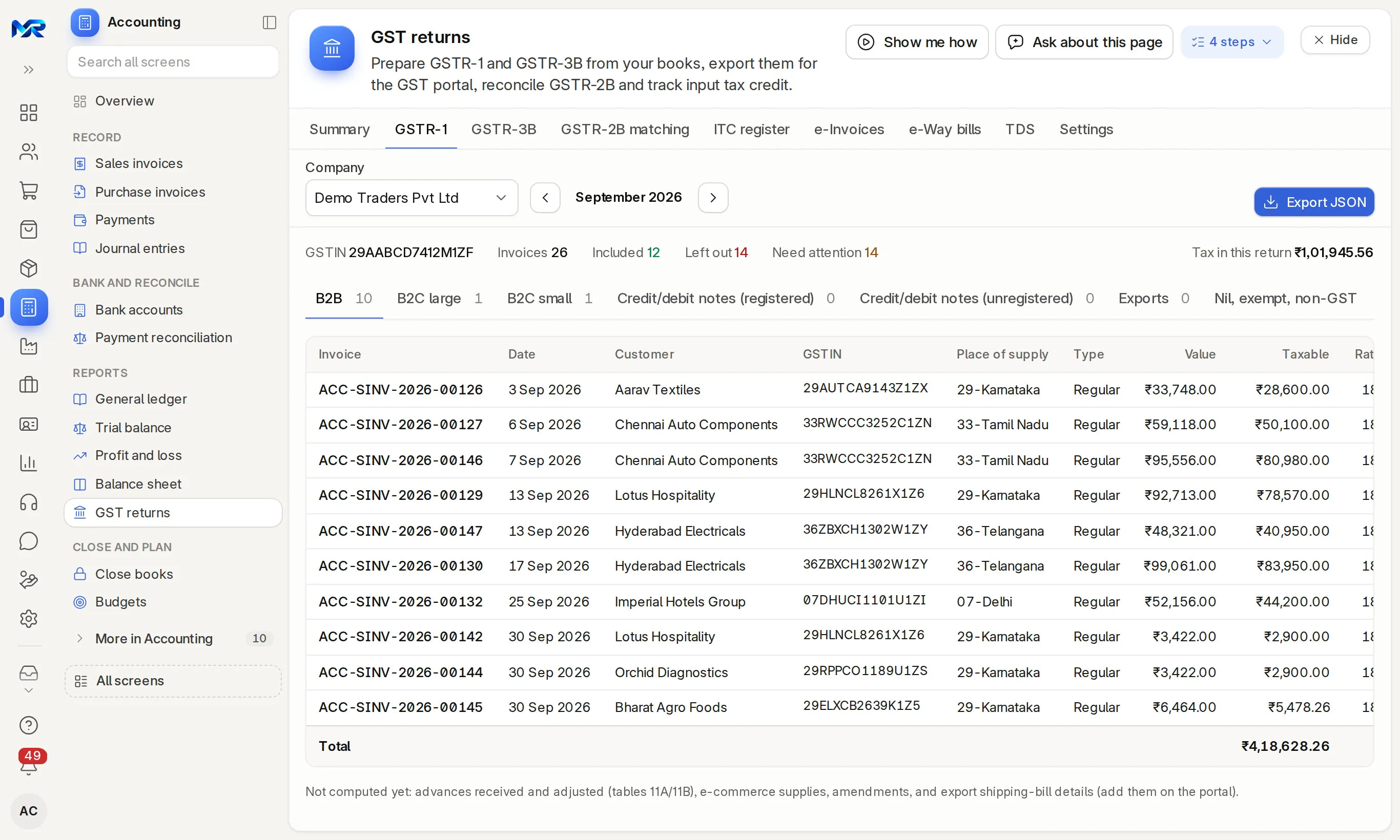
MyRecords builds the portal’s bulk-upload file from submitted deliveries, invoices and stock transfers, checks GSTIN, PIN codes, HSN, distance and transport details first, and records the e-way bill number, date and validity you get back. Creating, extending or cancelling the e-way bill straight from the document is available once you connect your e-way bill API login, from NIC or a GST Suvidha Provider.